
Ballooning in Luxor: An Honest Review

You hear them before you see them. Drumbeats pulsing through the crisp darkness of the Egyptian dawn. Eerie? A little. Memorable? Absolutely. These drumbeats are your welcoming committees’ idea of a welcome your mind will surely not be in any hurry to forget. This is how your adventure of ballooning in Luxor begins.
Even under the best of circumstances, nobody enjoys waking up at 3:30 in the morning. Voluntarily doing so while on holiday feels especially criminal, surely in direct violation of every therapist’s orders for “rest and relaxation”. But sometimes you have to trade sleep for something better, and my Mother and I agreed this experience definitely qualified.
Still, after an exhilarating yet exhausting day exploring some of Ancient Egypt’s most treasured sites, a little early-morning crankiness was unavoidable.
As we stepped out of our room at Djorff Palace, we were greeted by the sight of the Nile River, black as ink beneath the night sky and rippling softly in the chilly breeze. We wandered slowly past the pool and the illuminated façades of the modern-day palace, whose architecture evokes the elegance of Cairo’s Coptic-era buildings.


Our driver arrived promptly for our 4:30 AM pickup. We were told we’d be collecting a few other passengers before heading to the launch site. Unfortunately, we then spent over an hour waiting for someone who never appeared. It was a frustrating start to an already very early morning. Eventually, we picked up an Indian mother and daughter traveling together, along with a solo traveler, and finally made our way toward the fields.
When we arrived, the desert air felt noticeably colder than expected. Thankfully, we had prepared for that possibility. As we approached the launch site, our ears pricked up at the deep, booming sounds of drums beating rhythmically in the distance. Then we heard singing, and, as we stepped onto the fields, we were greeted by dozens of locals of all ages, dressed in traditional clothing, as they sang, danced, and beat their drums around blazing bonfires. It was a wild and fun welcome that neither of us will be in a hurry to forget!
As the sky slowly brightened and the bonfires flickered around us, we could make out dozens of deflated hot air balloons stretched across the fields alongside massive passenger baskets, known as gondolas, waiting to be filled.
Oddly, we were told we were not allowed to photograph or film the inflation process, which was a huge disappointment. From our previous ballooning experience in Vilnius, Lithuania, I remembered how fascinating the setup is to watch. Essentially, the process involves giant, industrial fans blasting air into the balloon and a lot of fire pouring from gas canisters. It’s both incredibly dramatic and photogenic.
Shortly before sunrise, our balloon pilot called us over to join a larger group. Climbing into the gondola was more awkward than graceful, requiring an enthusiastic swing of the leg and a bit of upper-body strength. If mobility is an issue, this is definitely something to keep in mind.
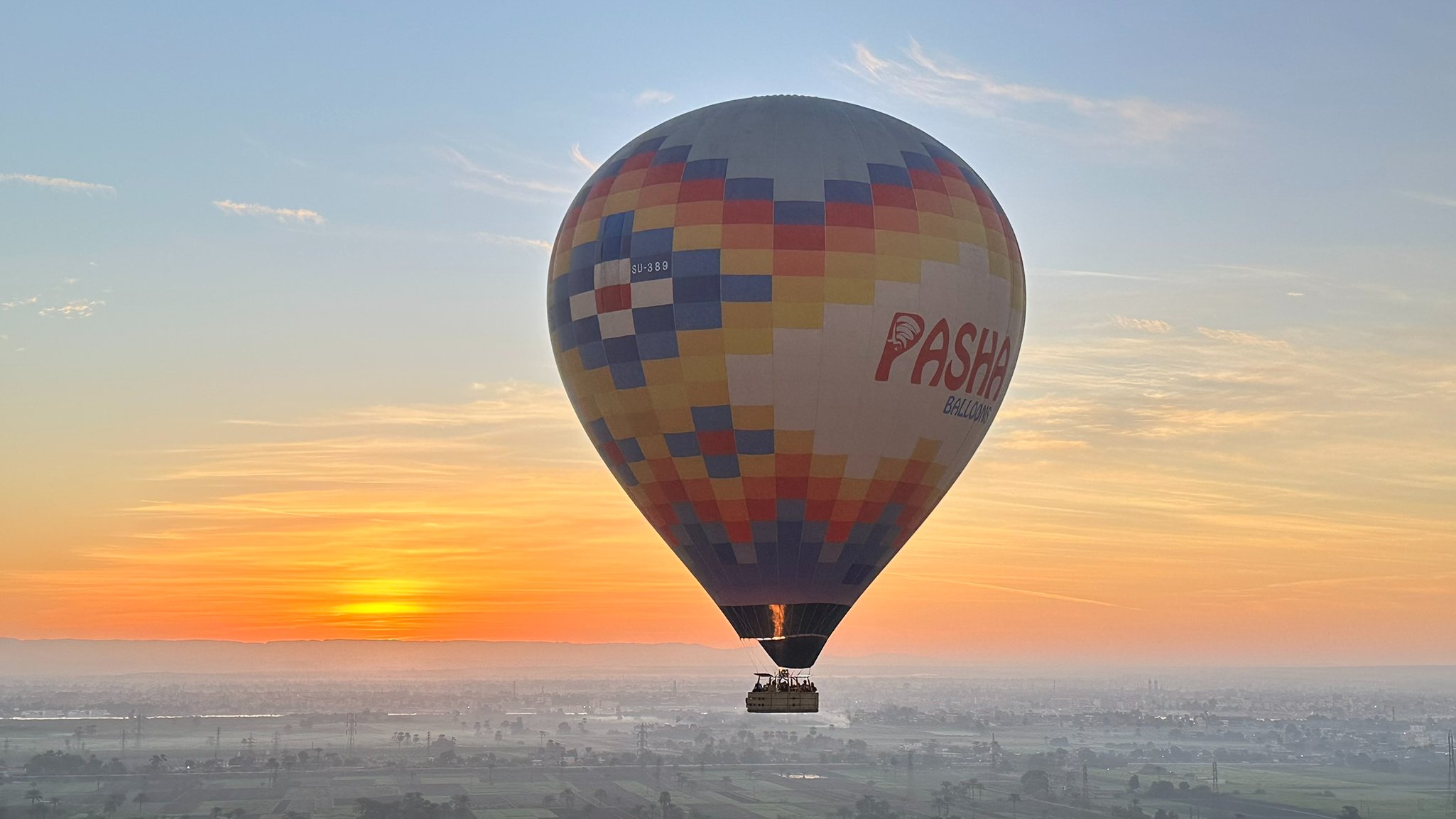
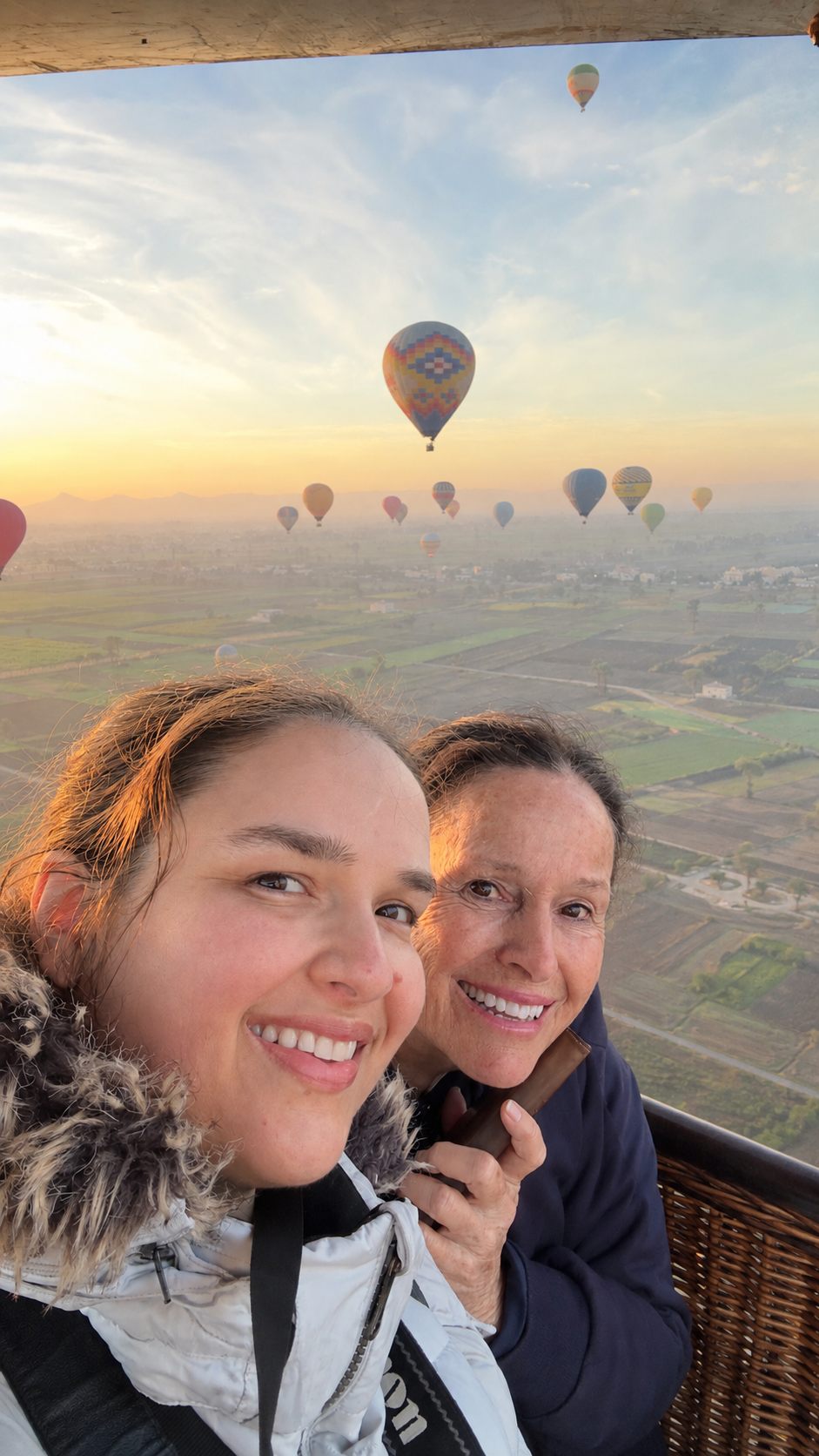
Once we were settled inside, I heard the roar of the burner overhead and felt a wave of intense heat wash down over us. And, just like that, we were off!

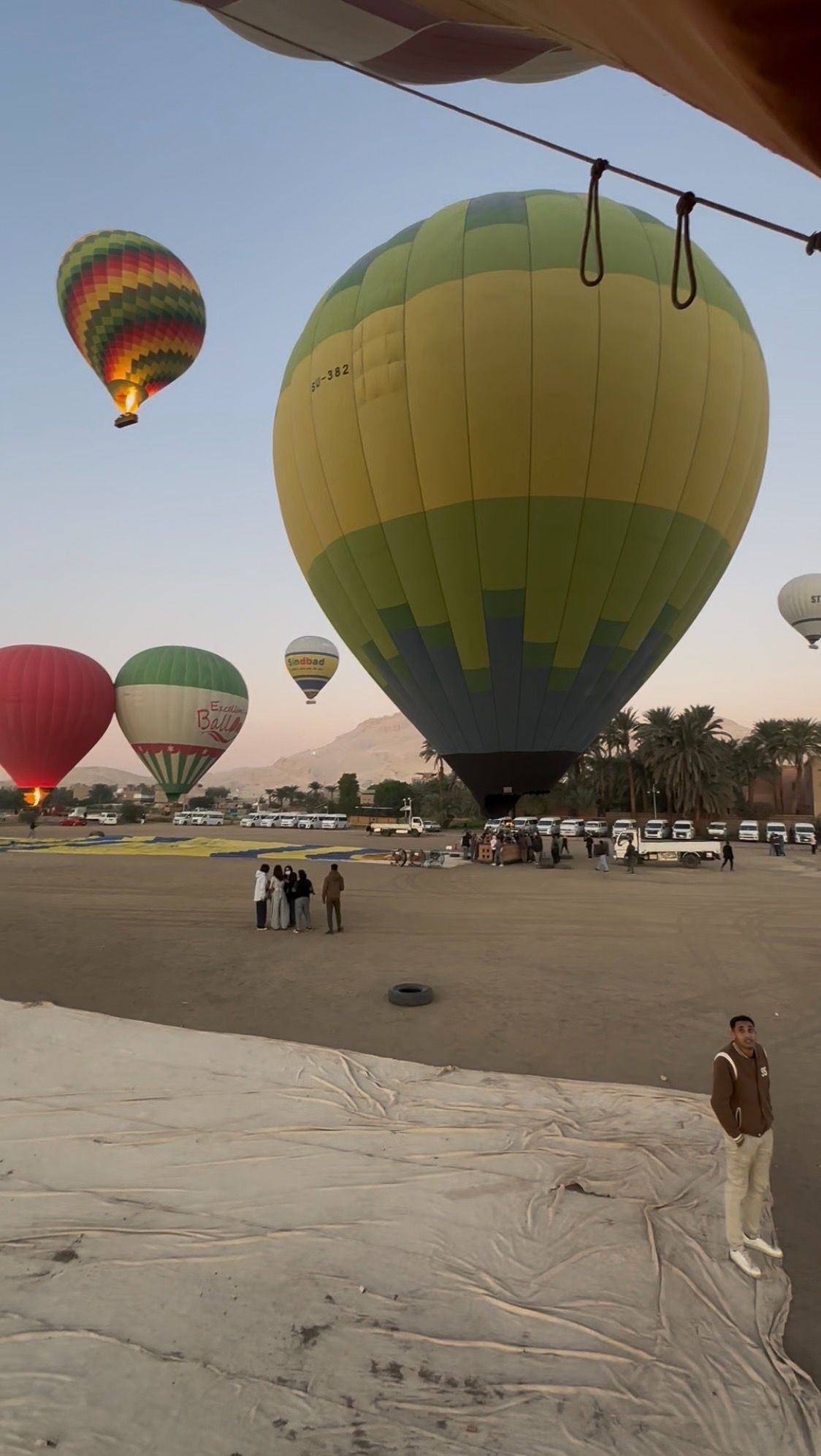
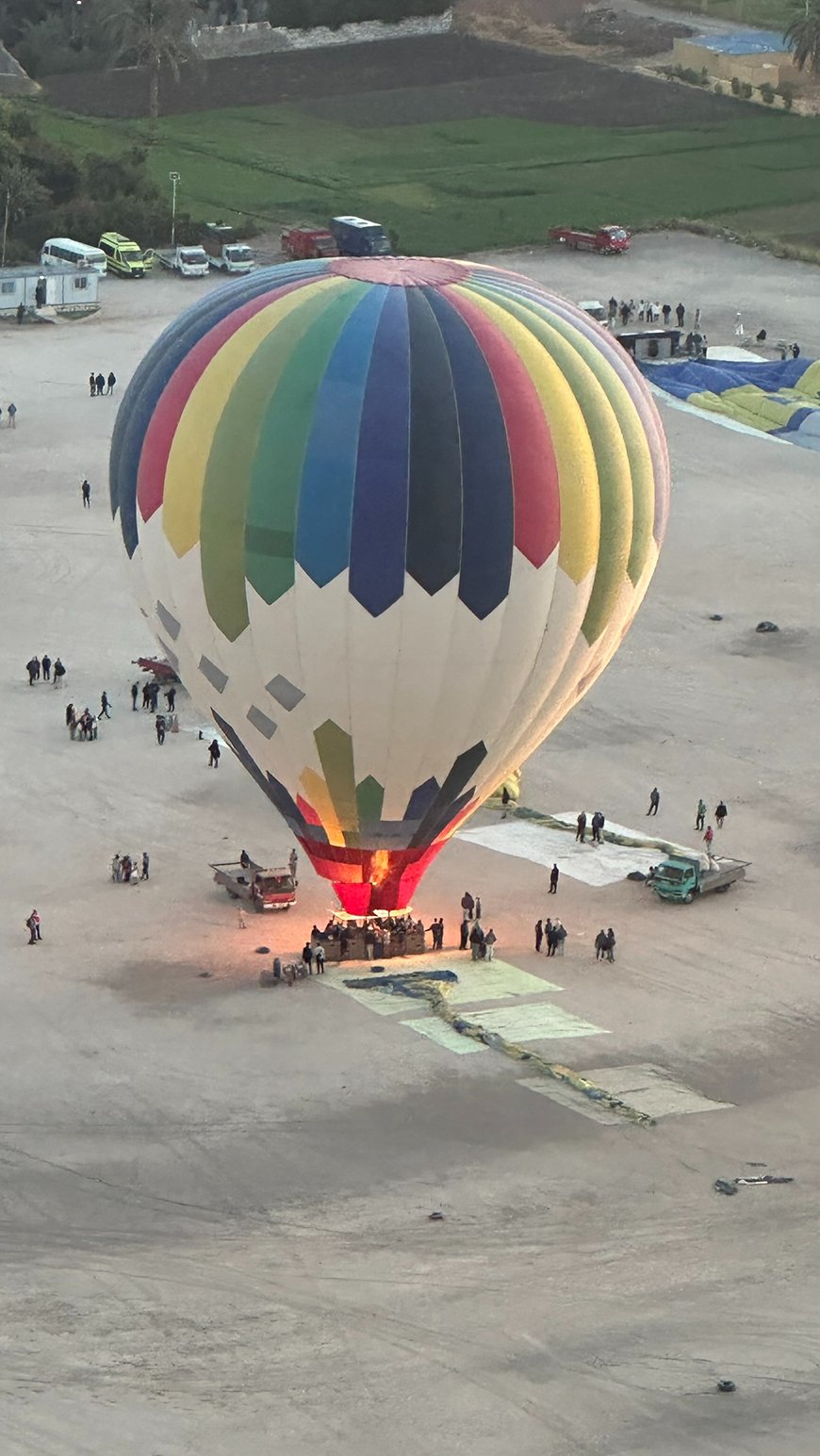
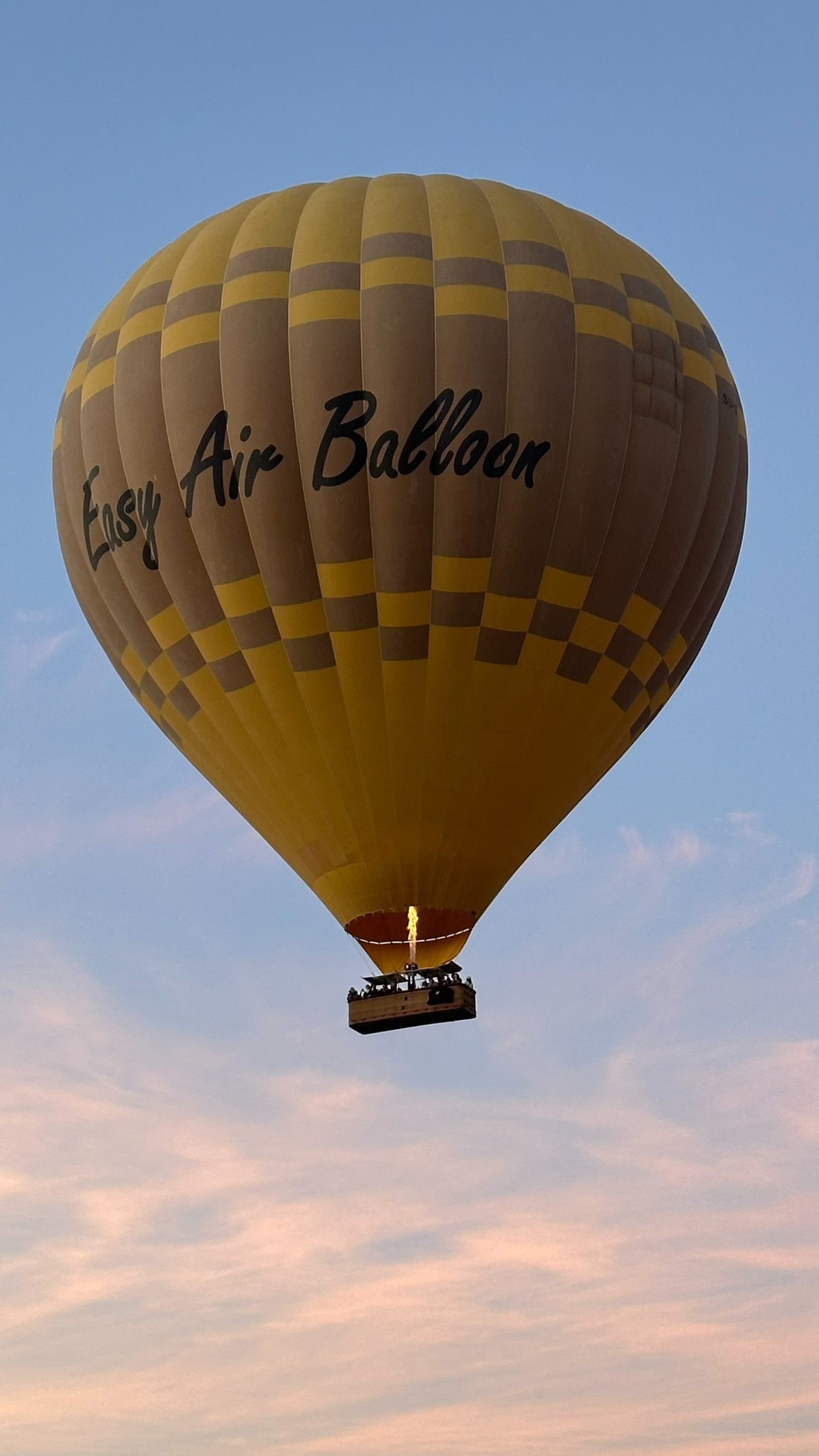
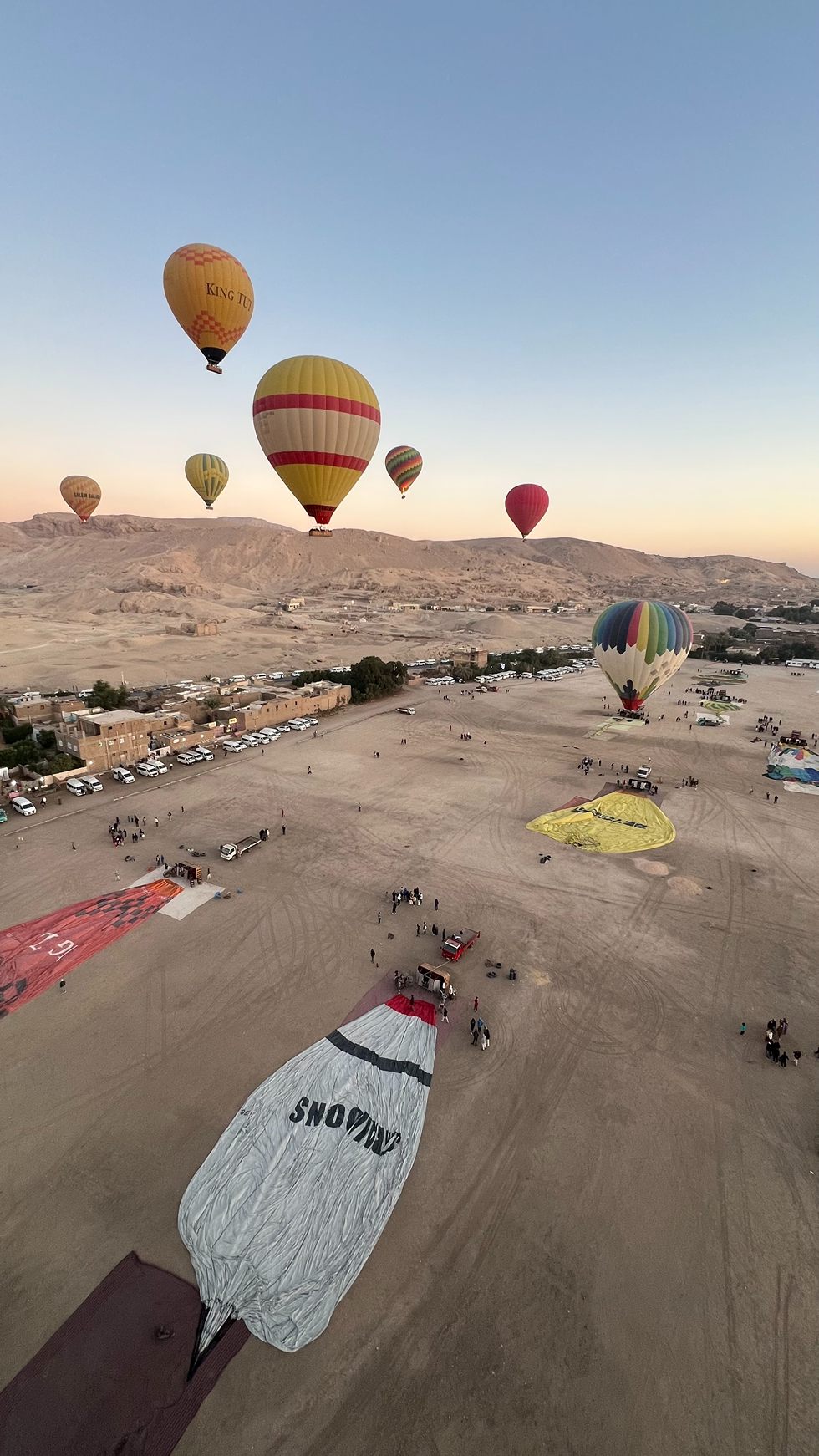
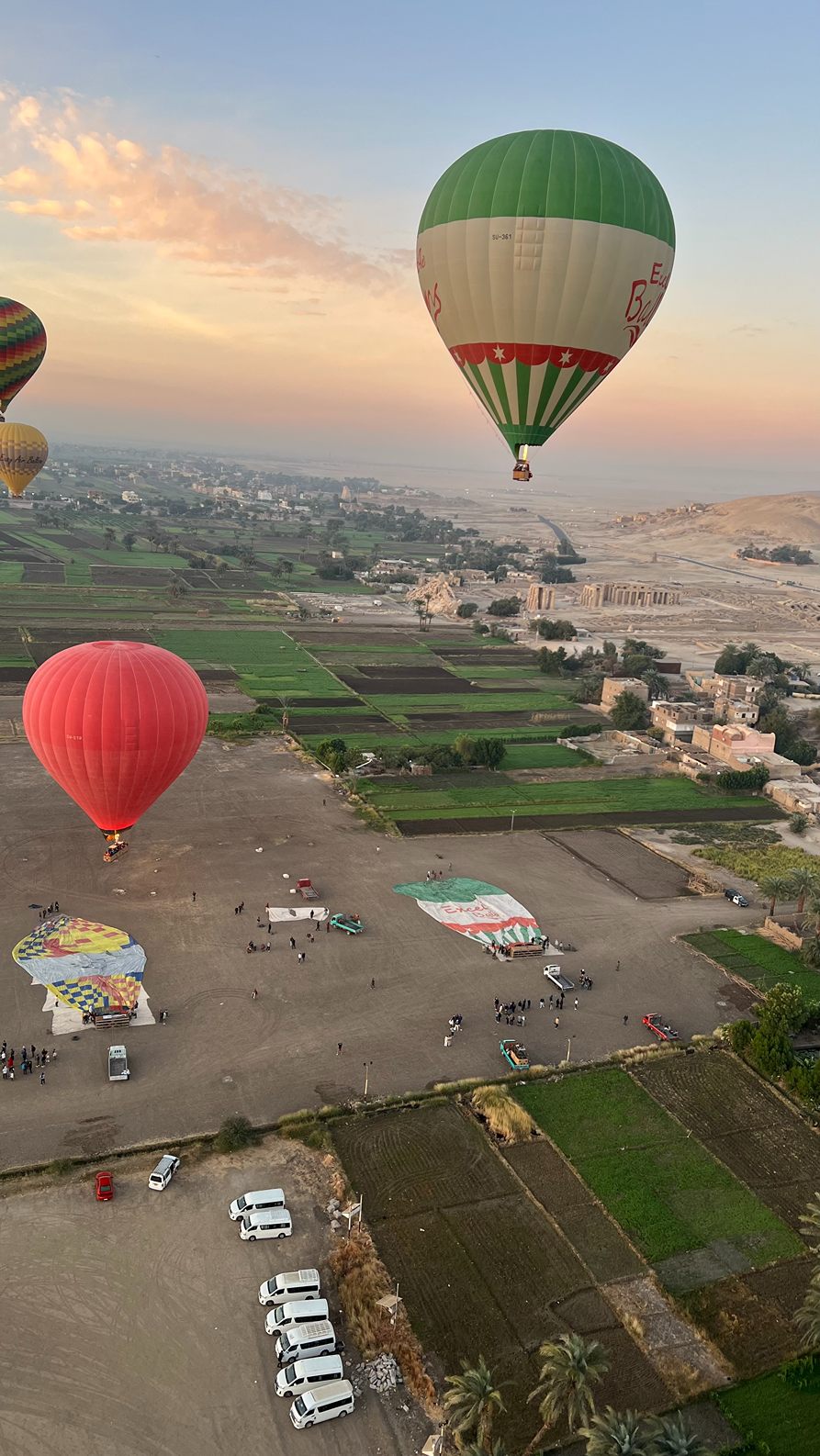
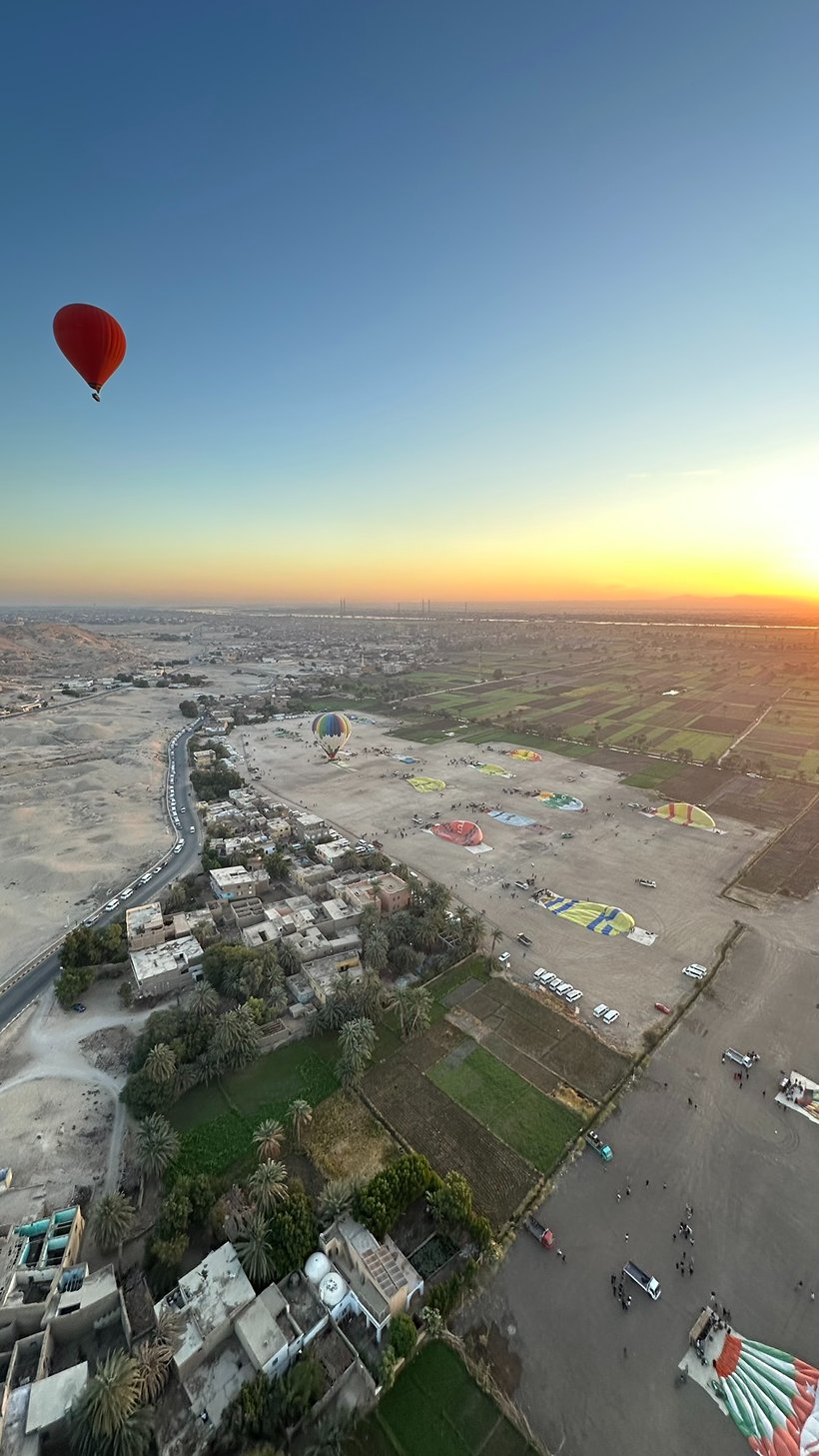
Many balloons did not get clearance to take off in time for sunrise.
How an Acrophobic Goes Ballooning
Something I neglected to mention earlier: I have a fear of heights.
So, you would naturally think that floating hundreds of feet in the air would be especially triggering, but miraculously, it is not. It certainly helped that this time around I knew what to expect. But whereas ballooning over Vilnius was splendid, ballooning over Luxor came with endless distractions.
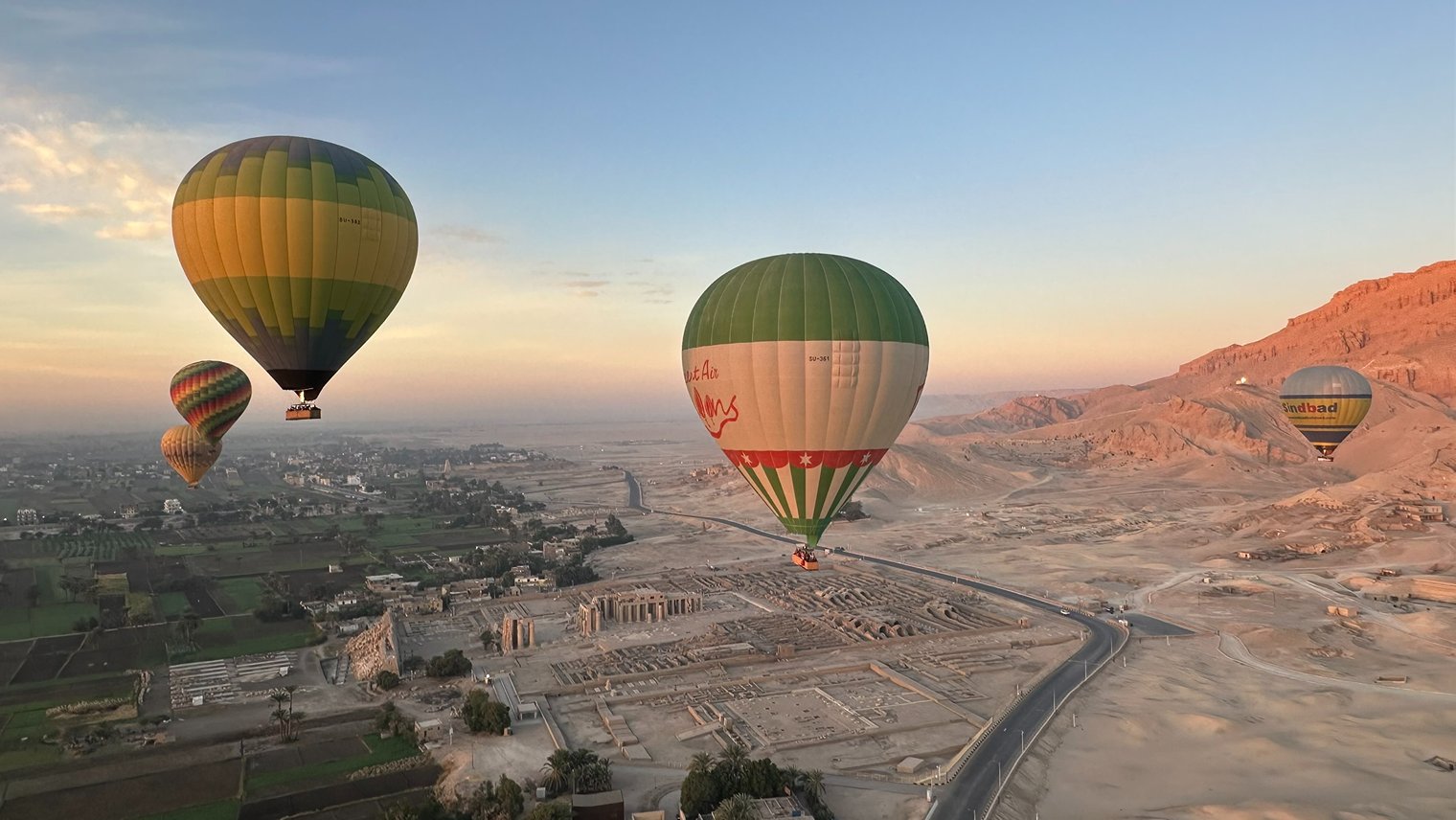
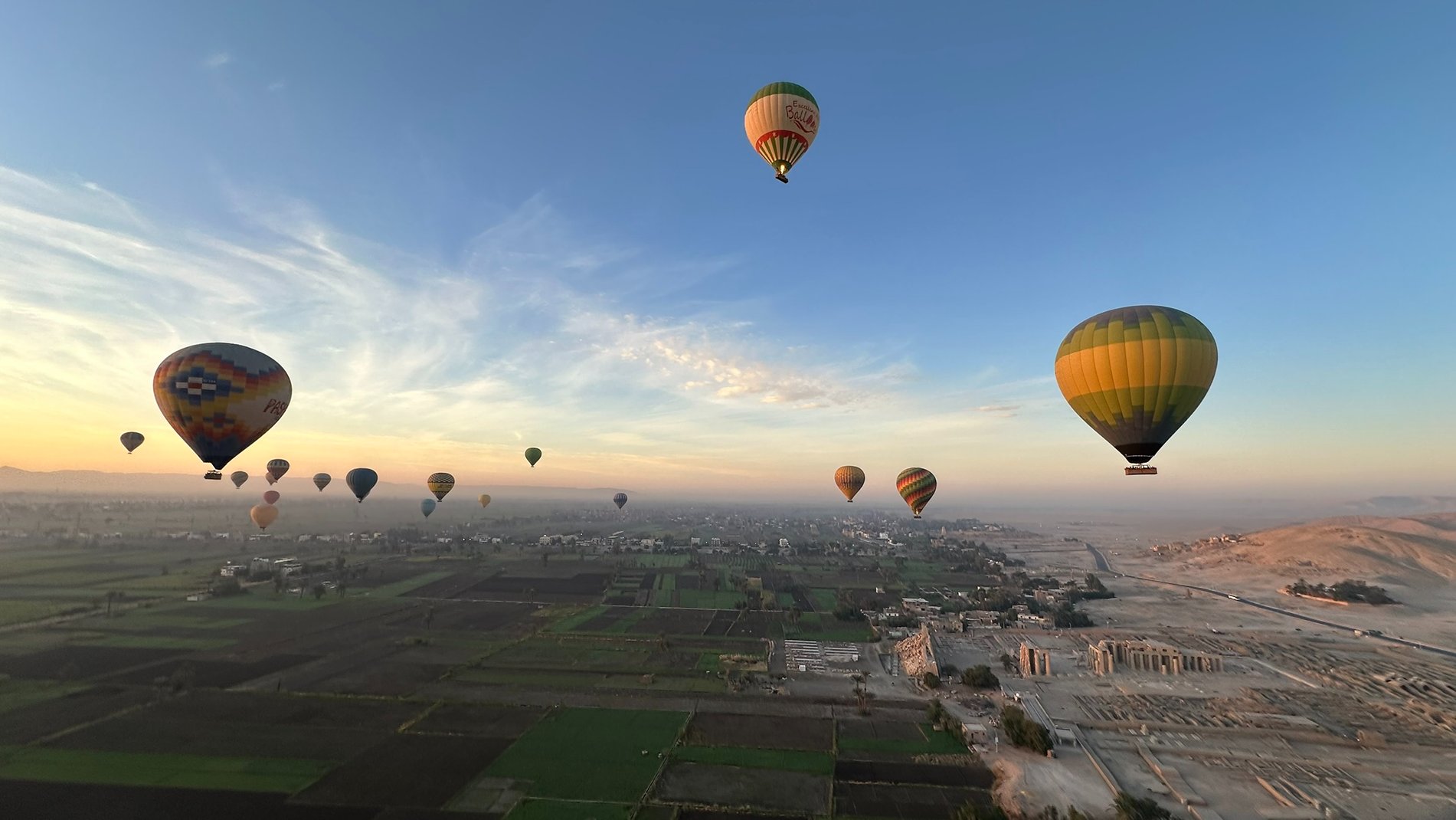
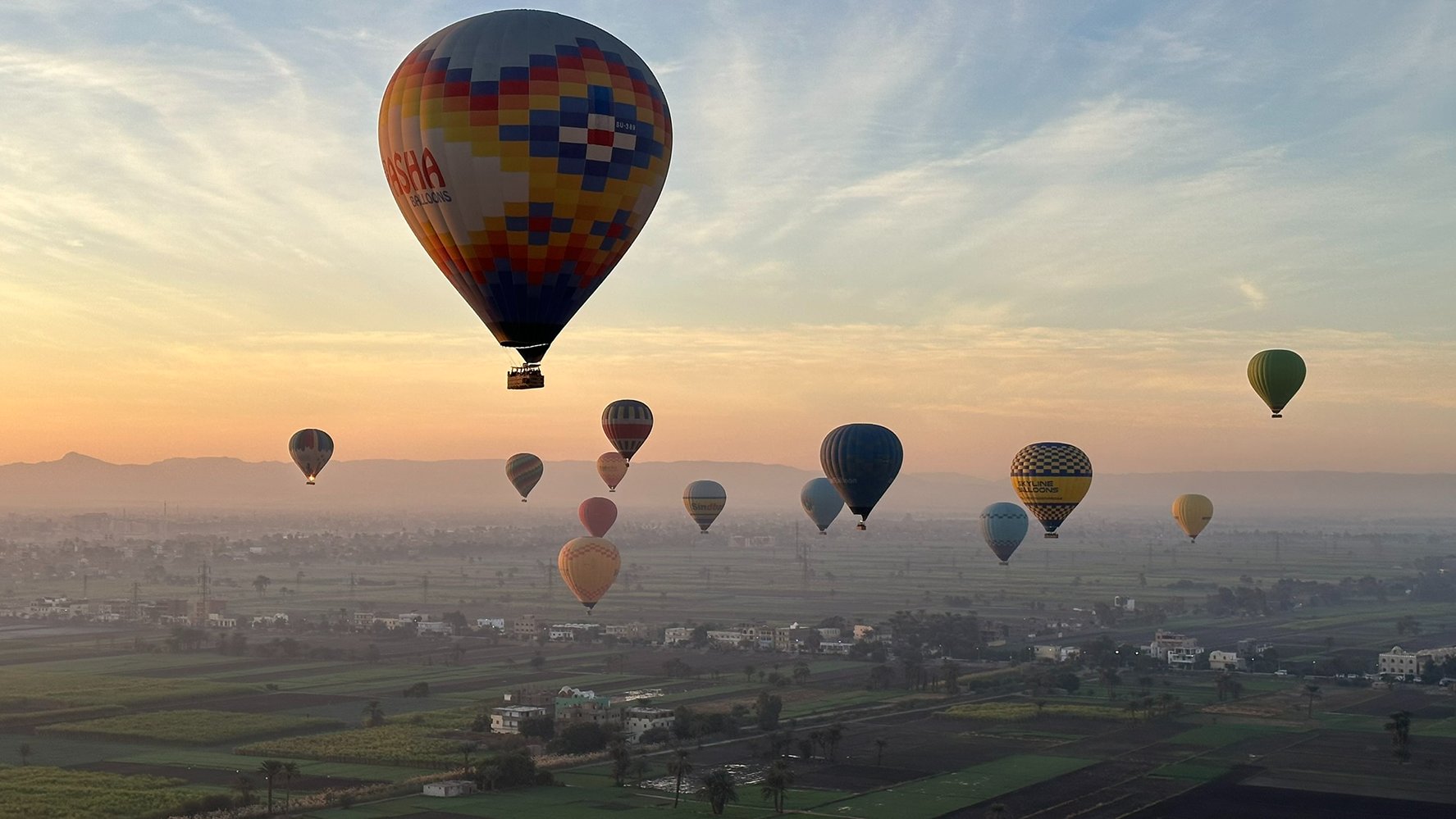
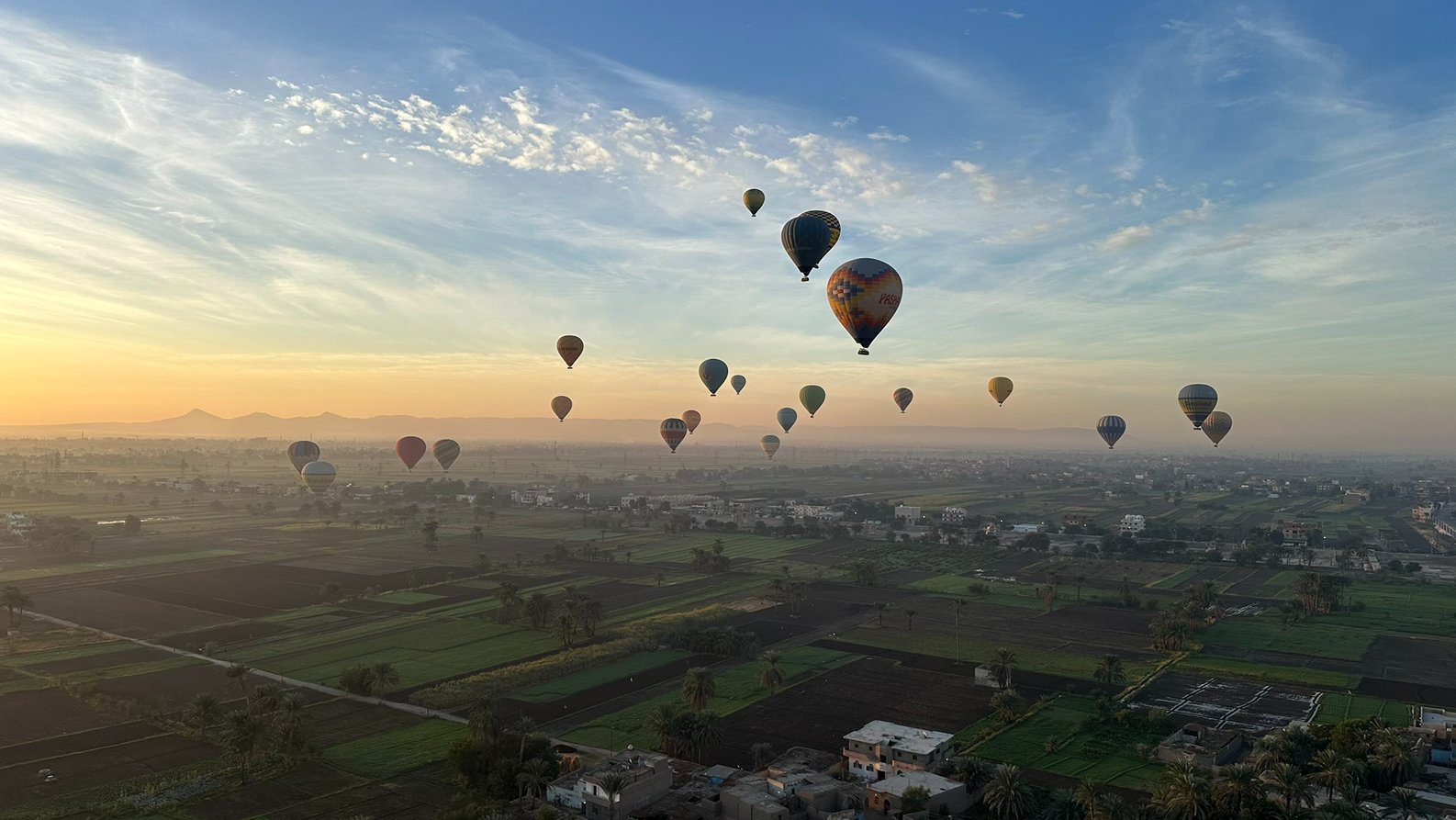
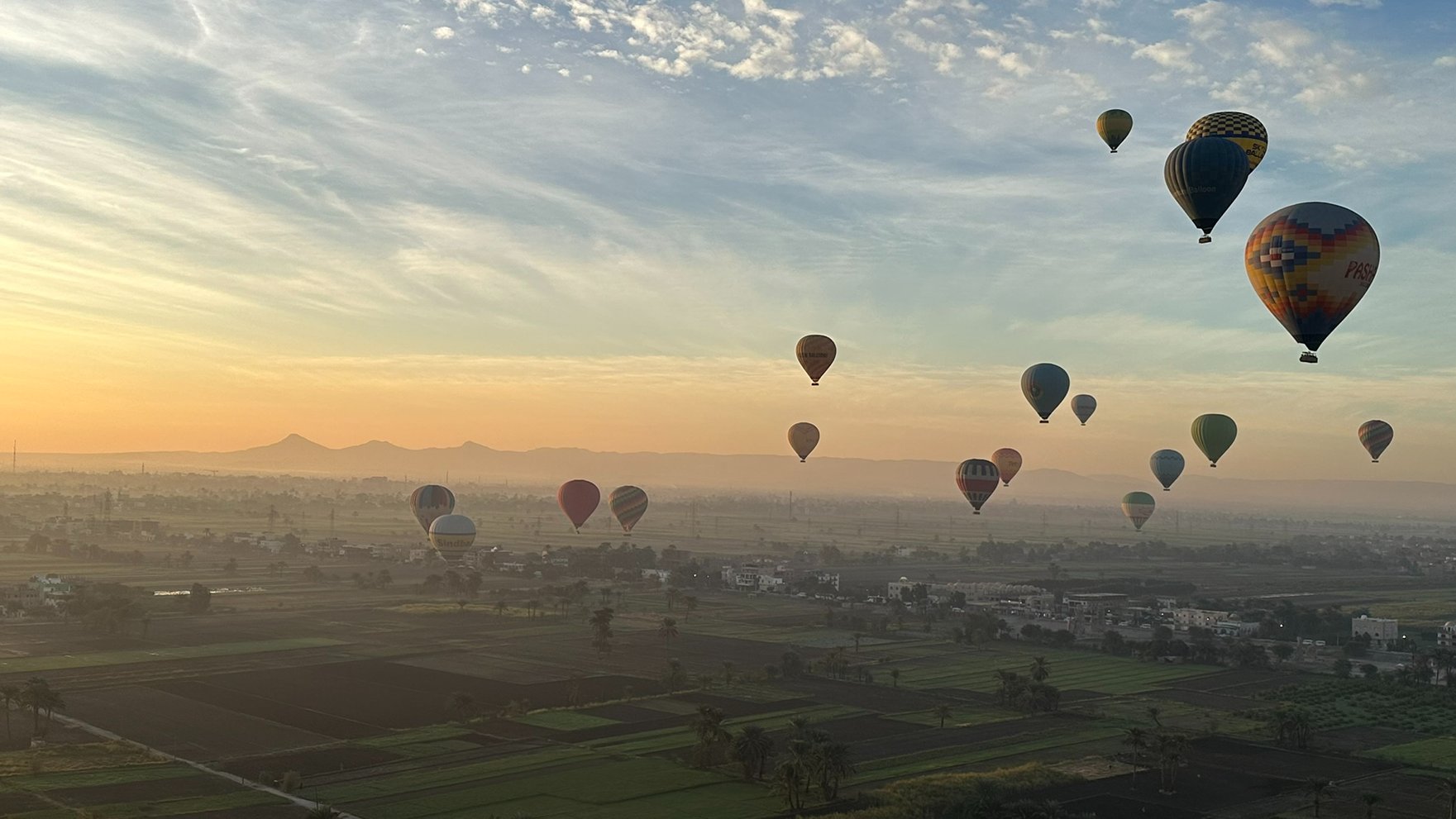
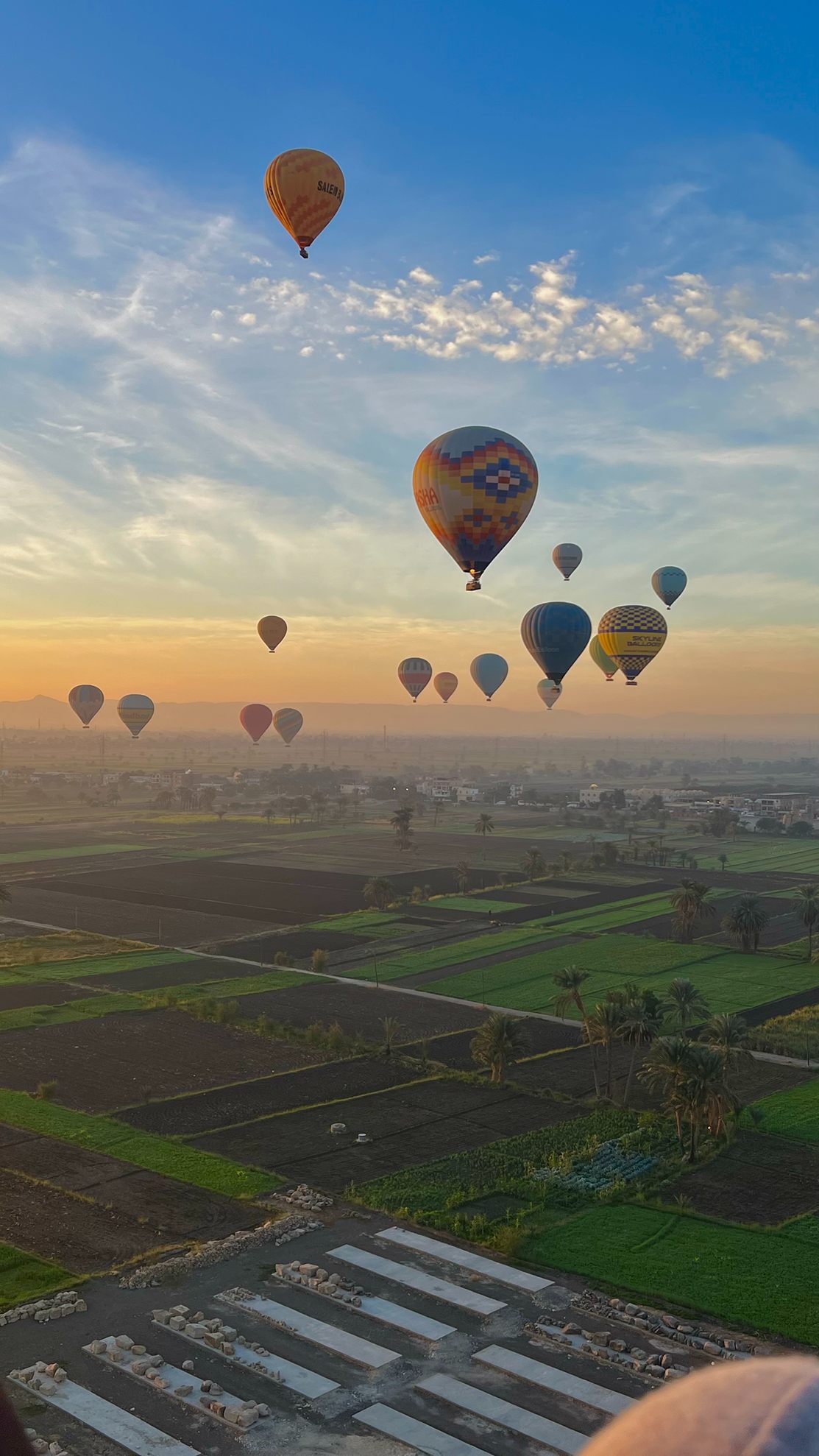
I think the magic was in the immersion of the experience. There was always something demanding my attention! Whether it was the near constant murmuring of excited passengers, the hiss of gas and roar of flames, the balloonist shouting at us to look over the horizon as the sun slowly rose, showering the Nile Valley and us with rays of golden light.
But honestly, I think my biggest distraction was my yearning to capture some great photography.
Armed with a CACOE cross-body phone strap and questionable phone-preservation instincts, I spent most of the flight dangling my phone over the edge of the basket trying to capture every possible angle of the temples below. Every few seconds seemed to present another impossible-to-ignore photo opportunity. Conveniently, I let my phone do the terrifying job of “looking down” for me.
Easy-peasy, lemon-squeezy.
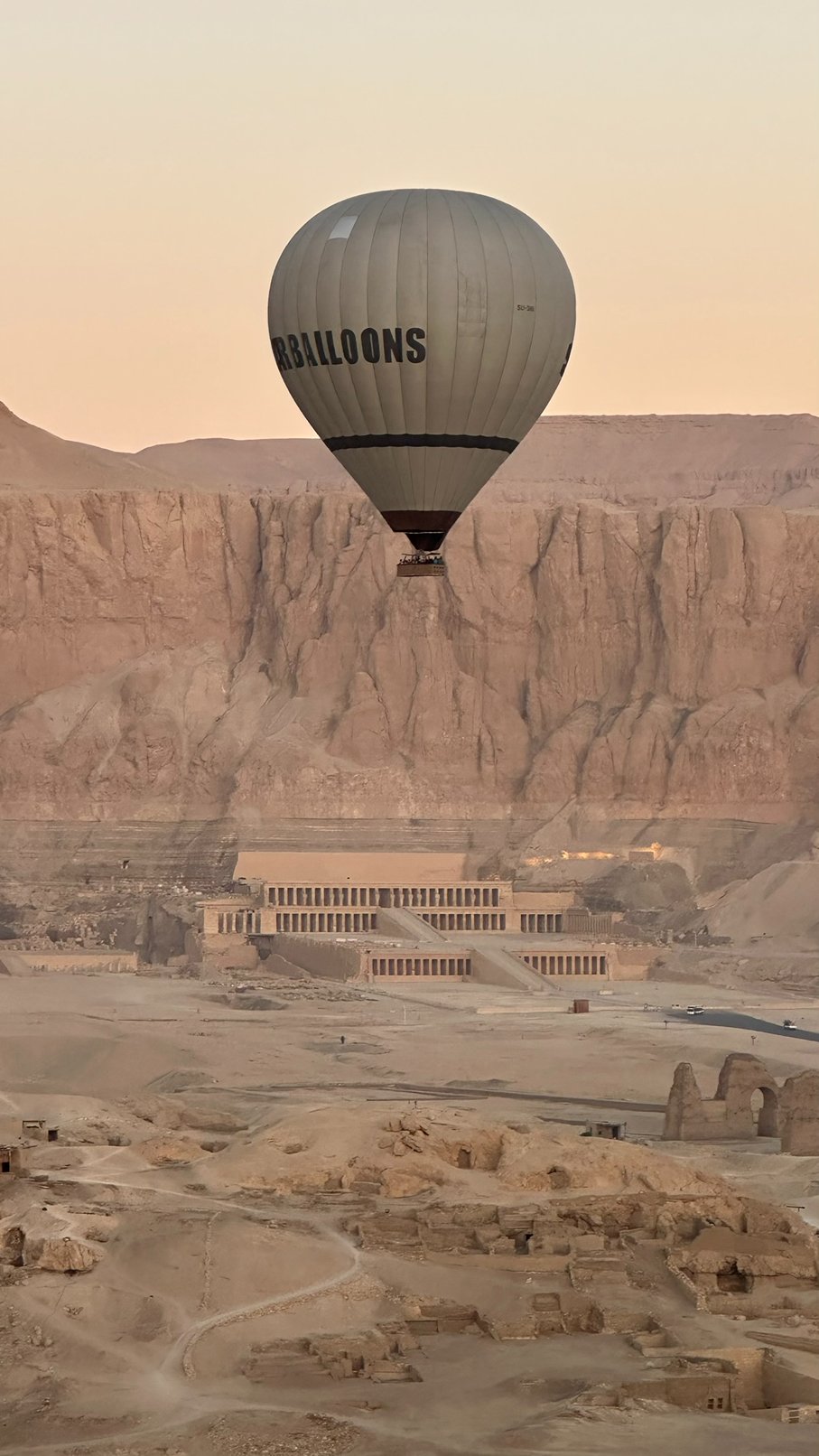
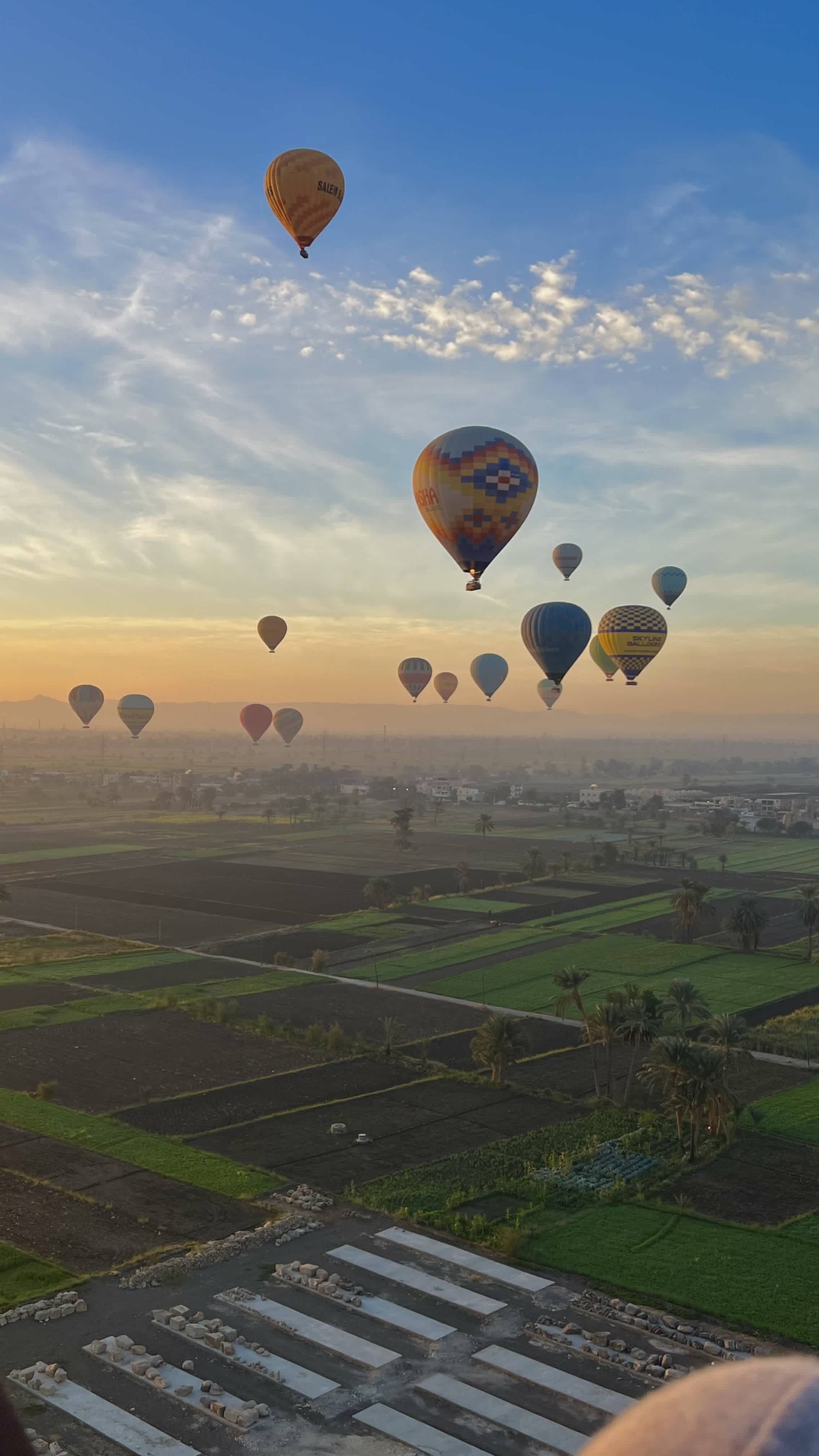
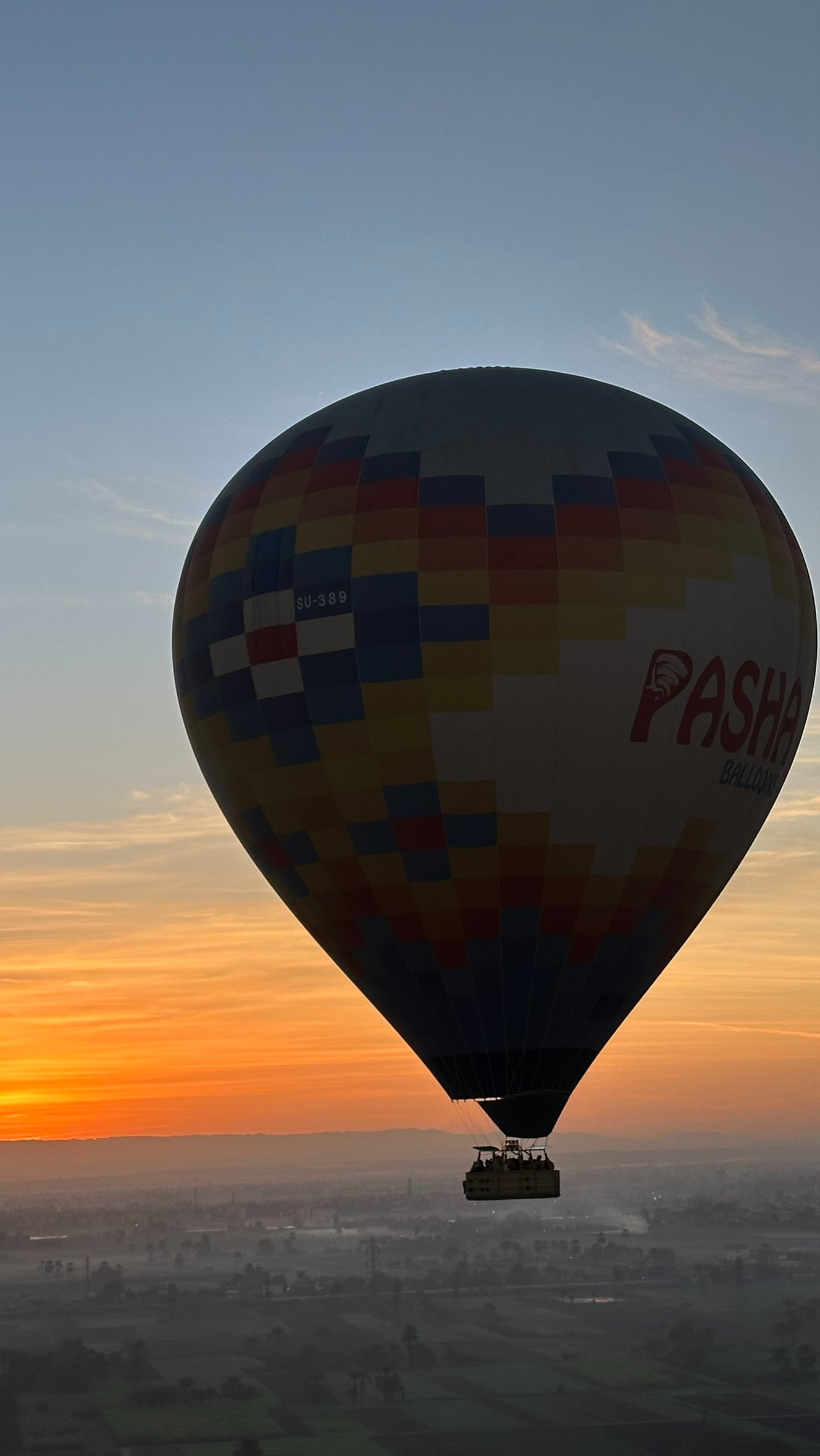
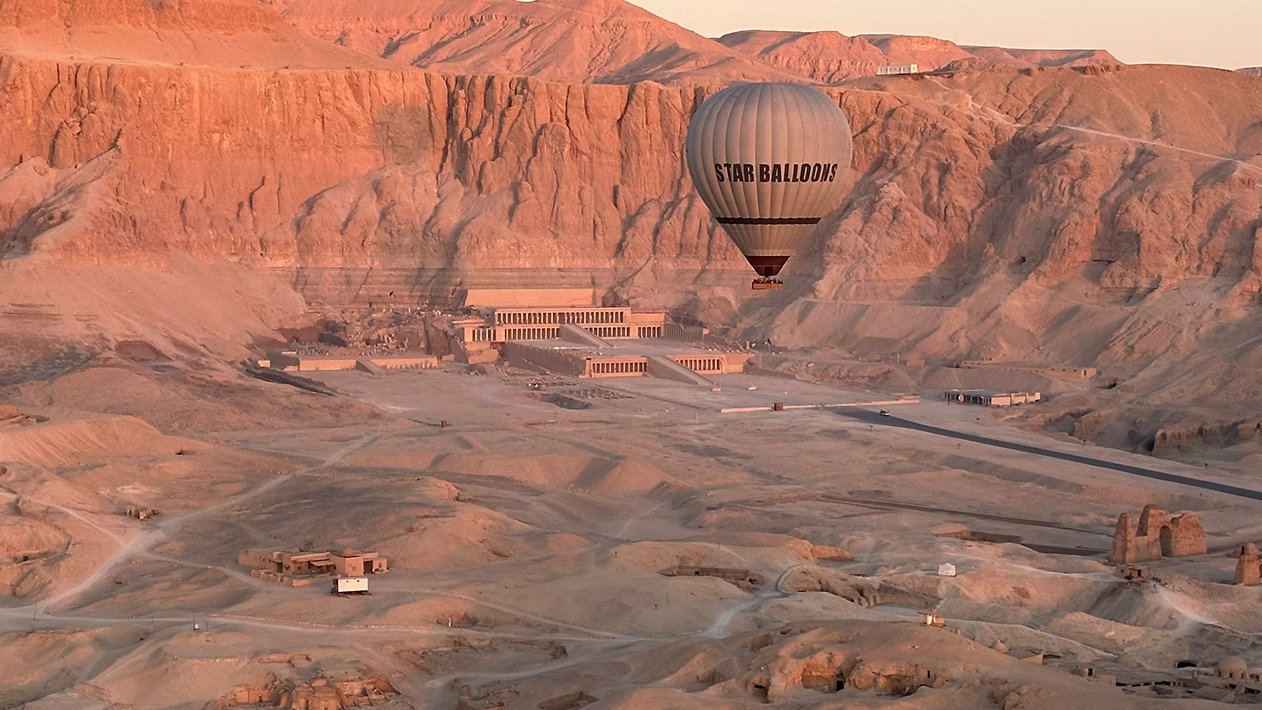
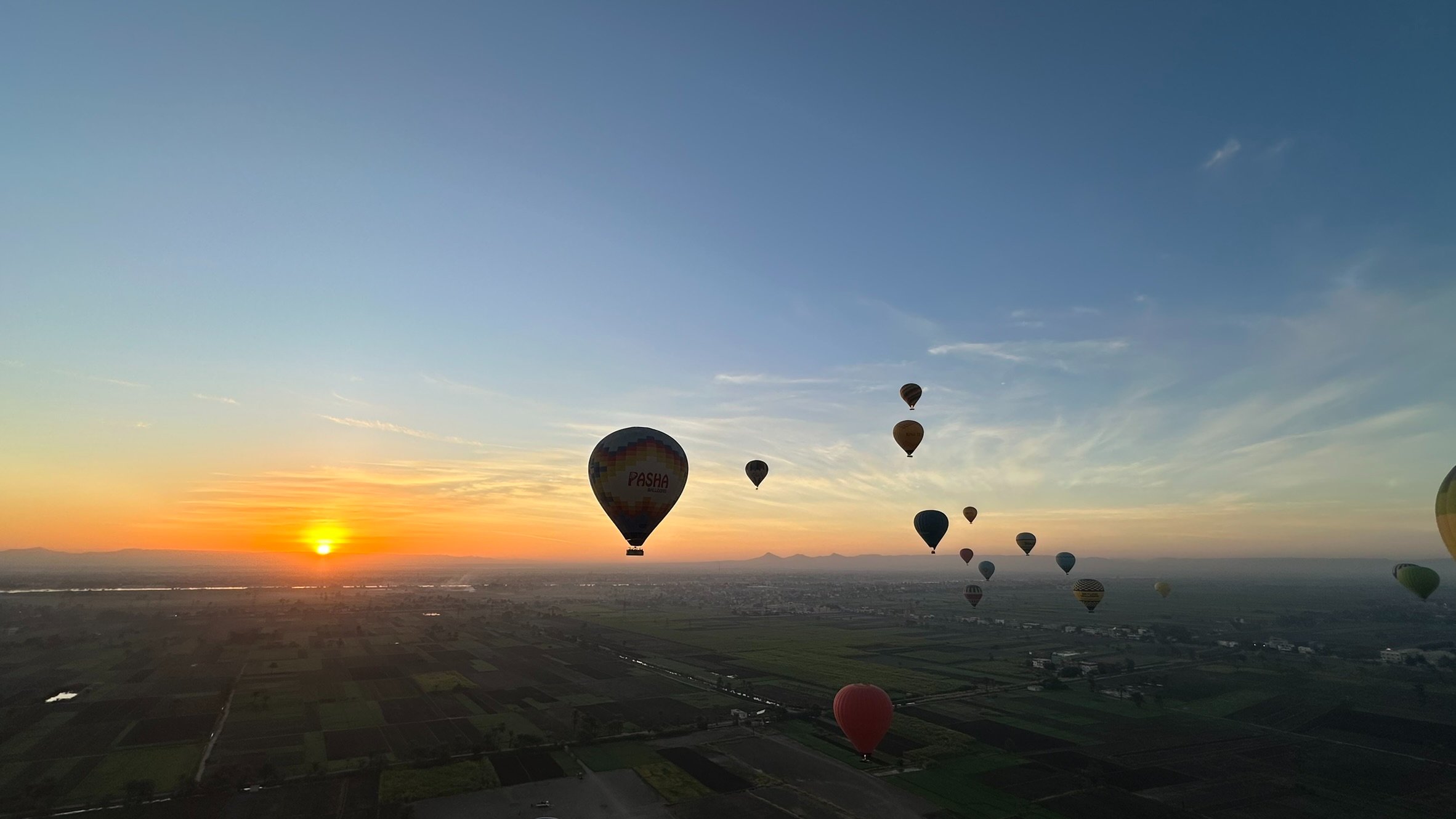
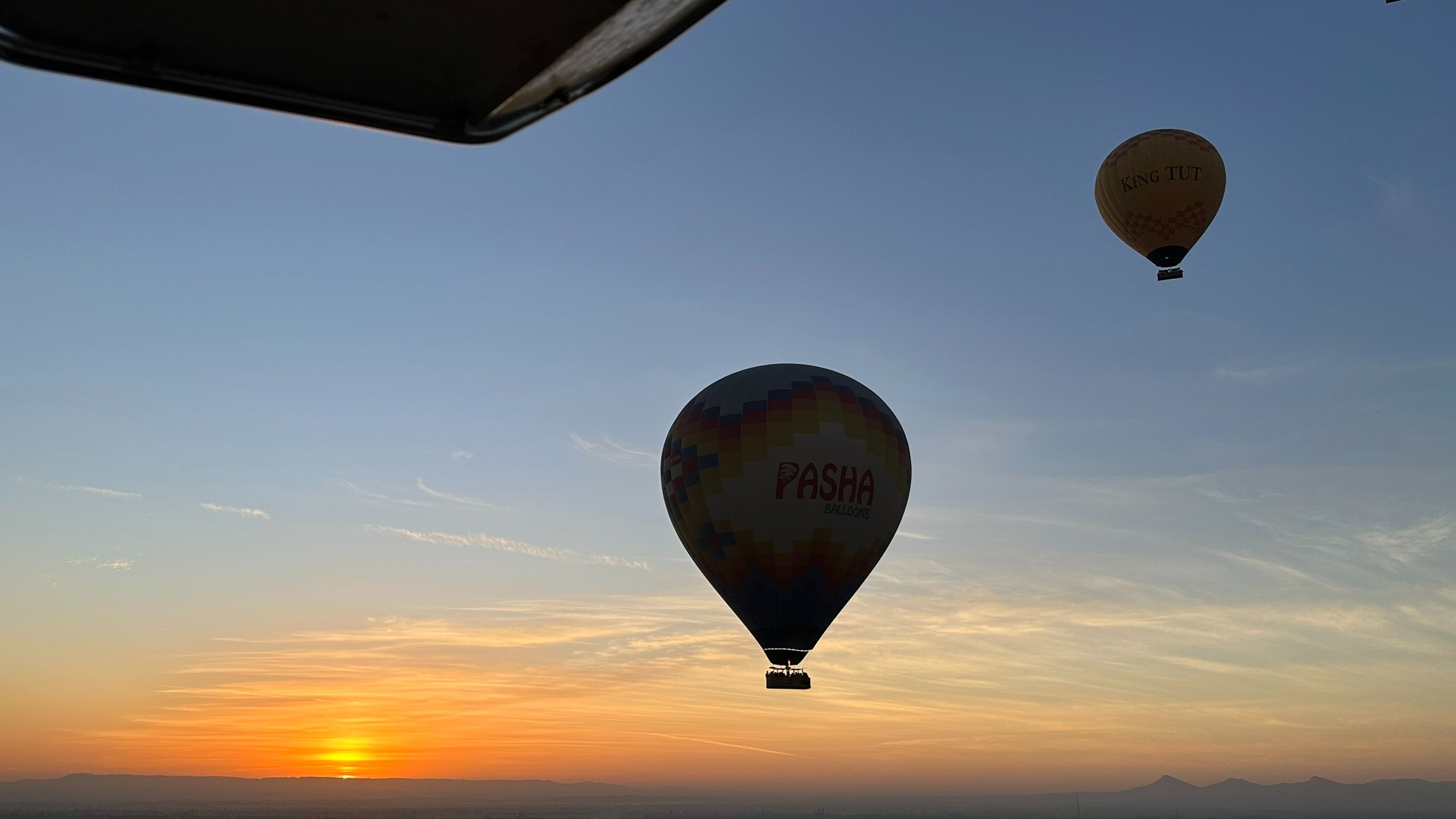
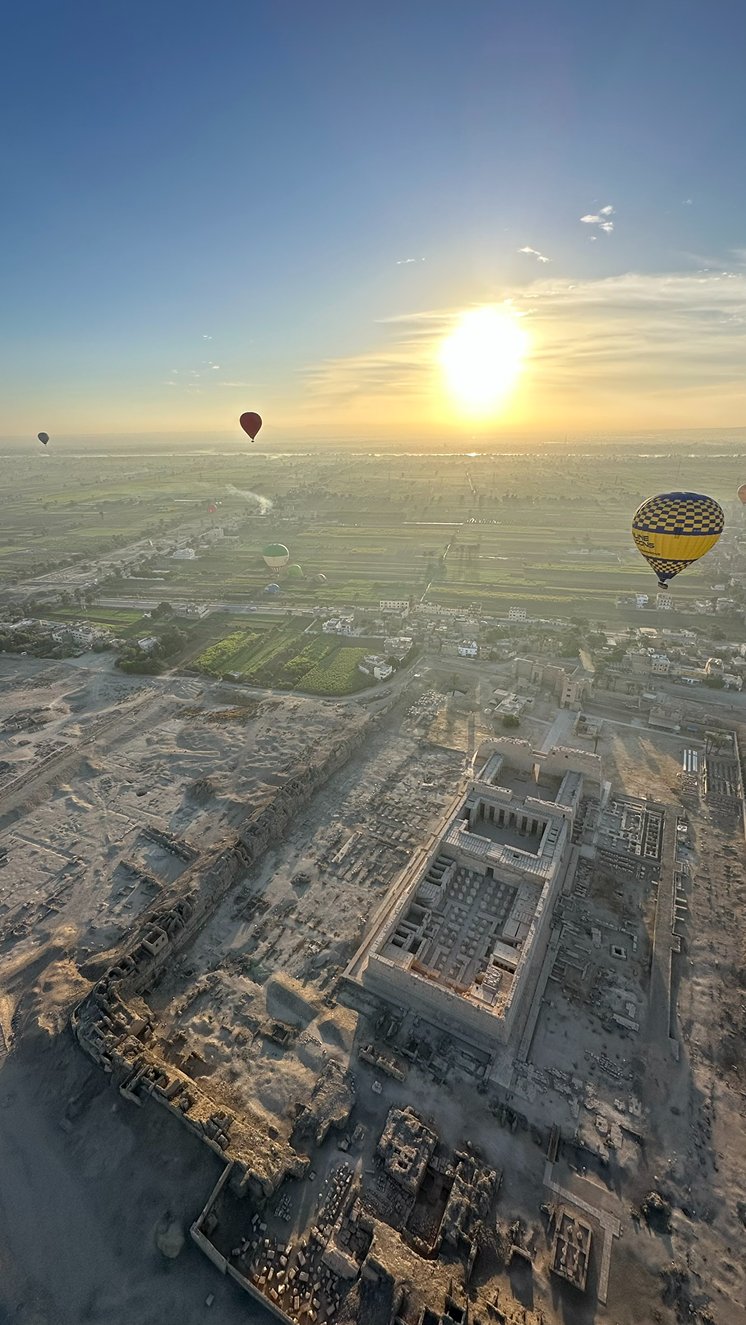
The Ramesseum is the mortuary temple built by Ramesses II during the 13th century BCE. It was dedicated to the god Amun and to Ramses own divine legacy. It served as a place for religious rituals and for honoring Ramses for countless generations after his death.
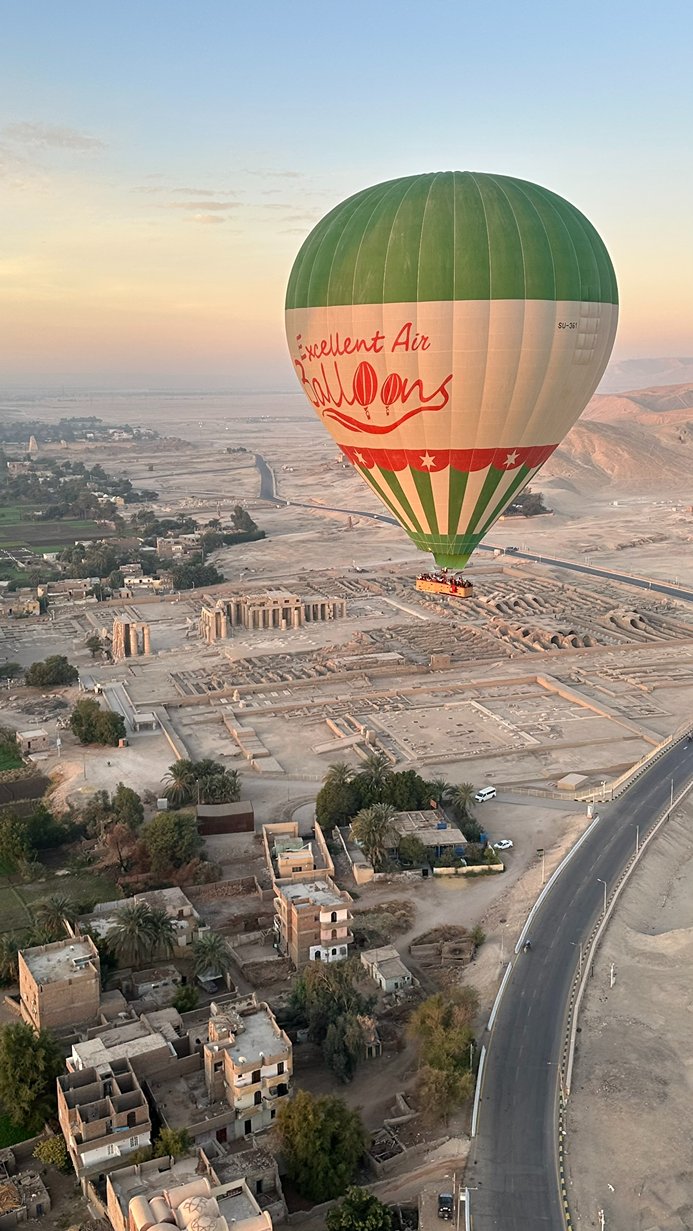
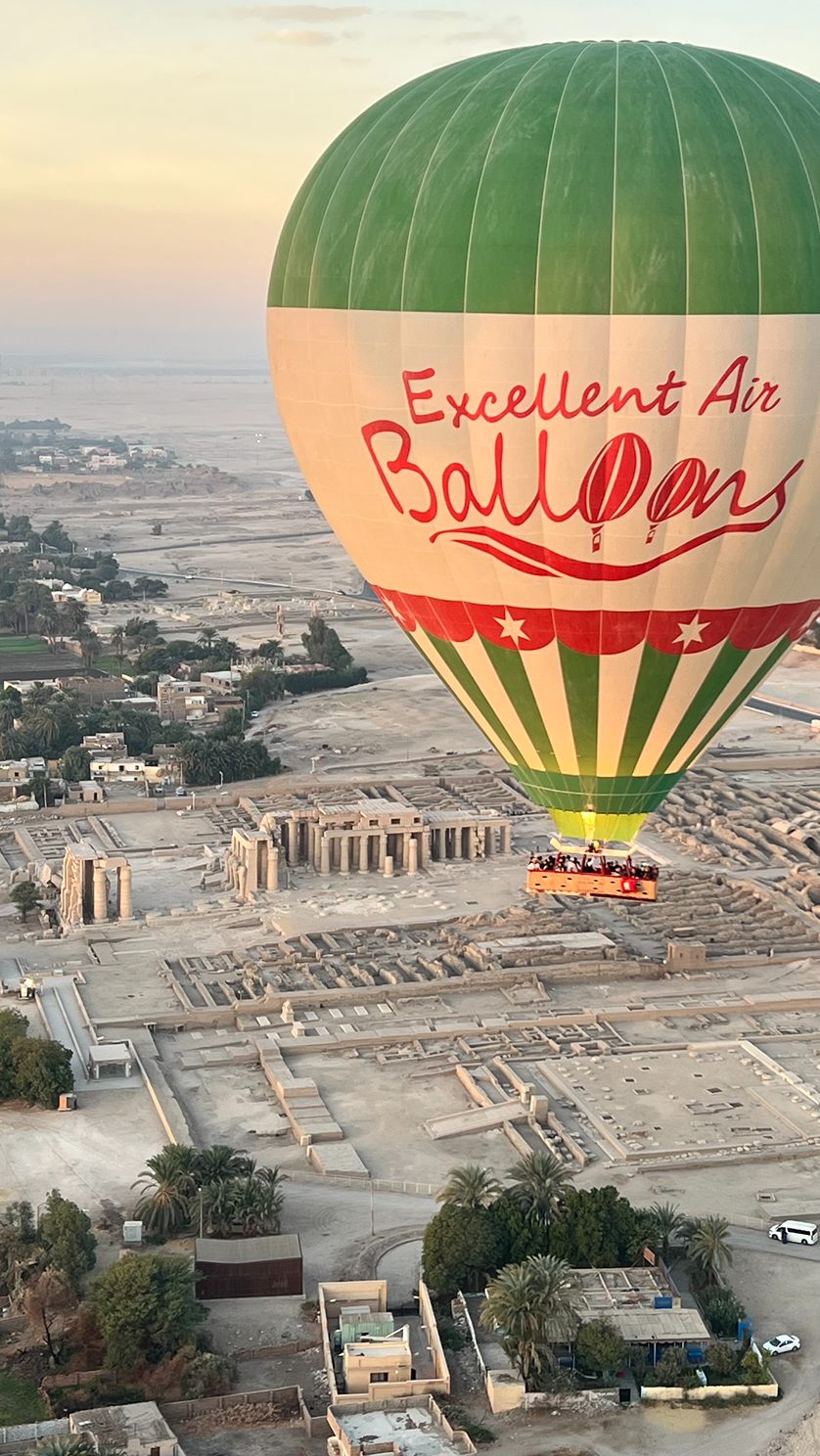
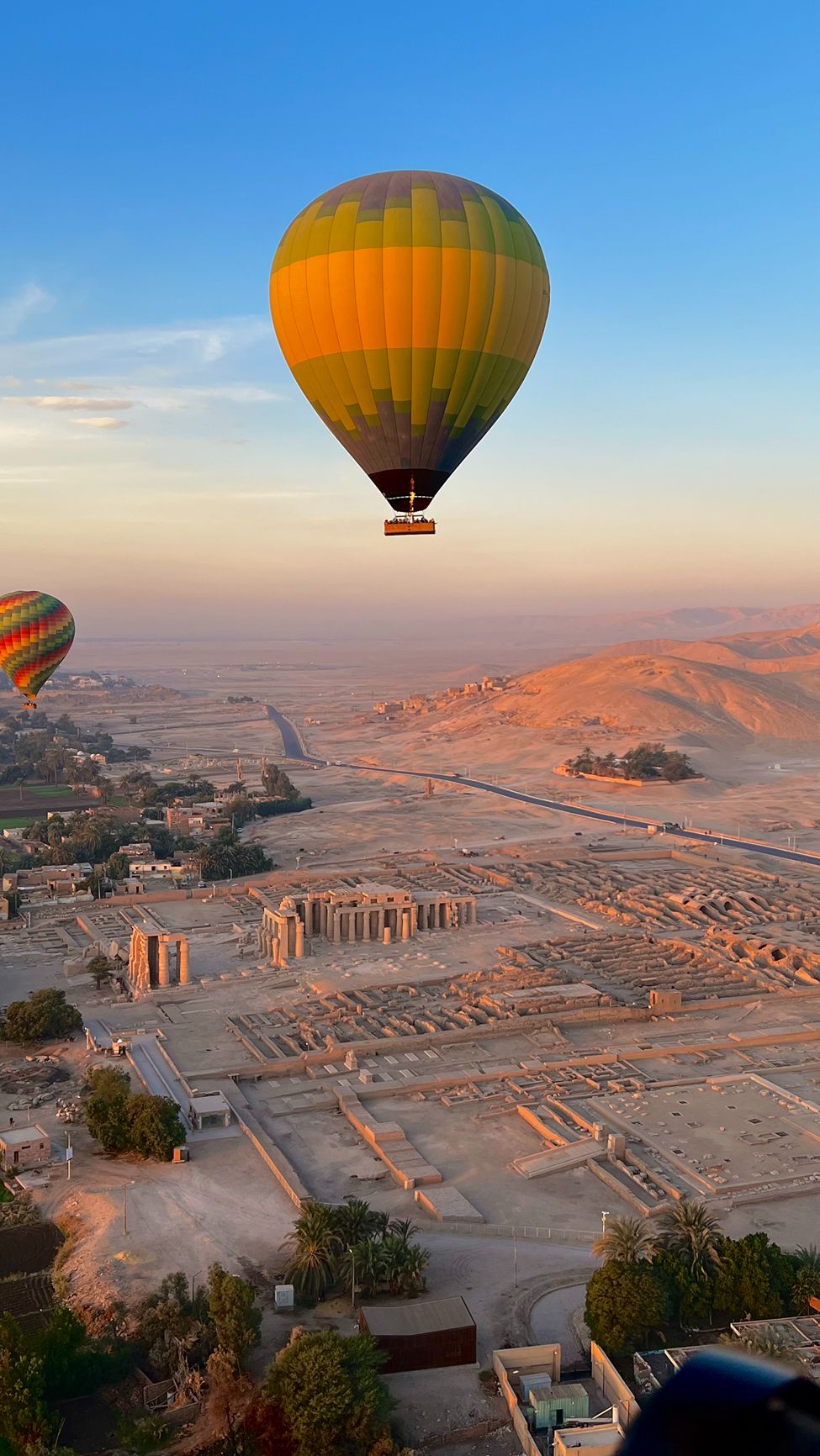
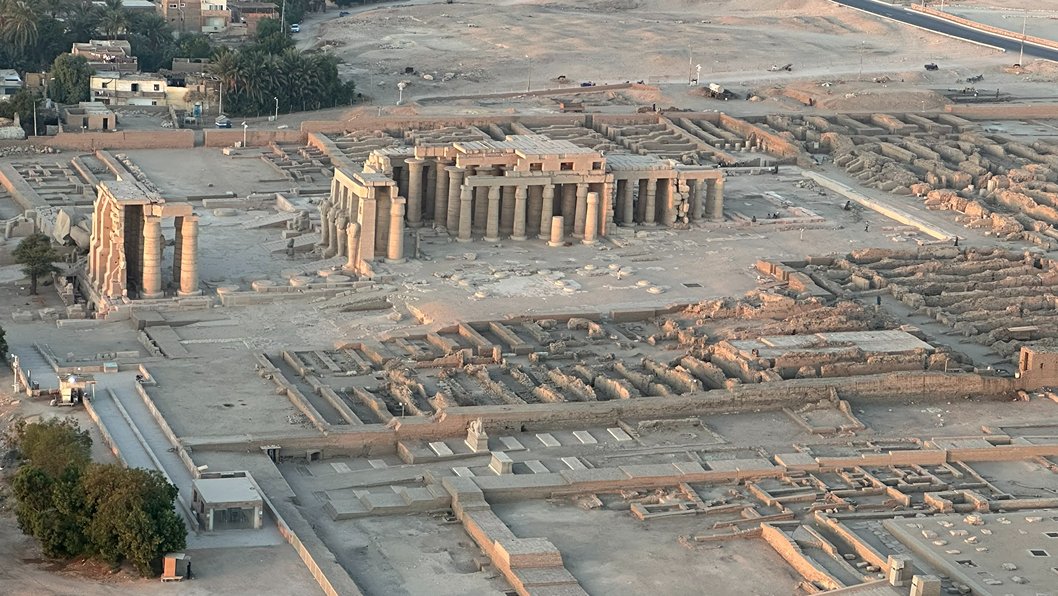
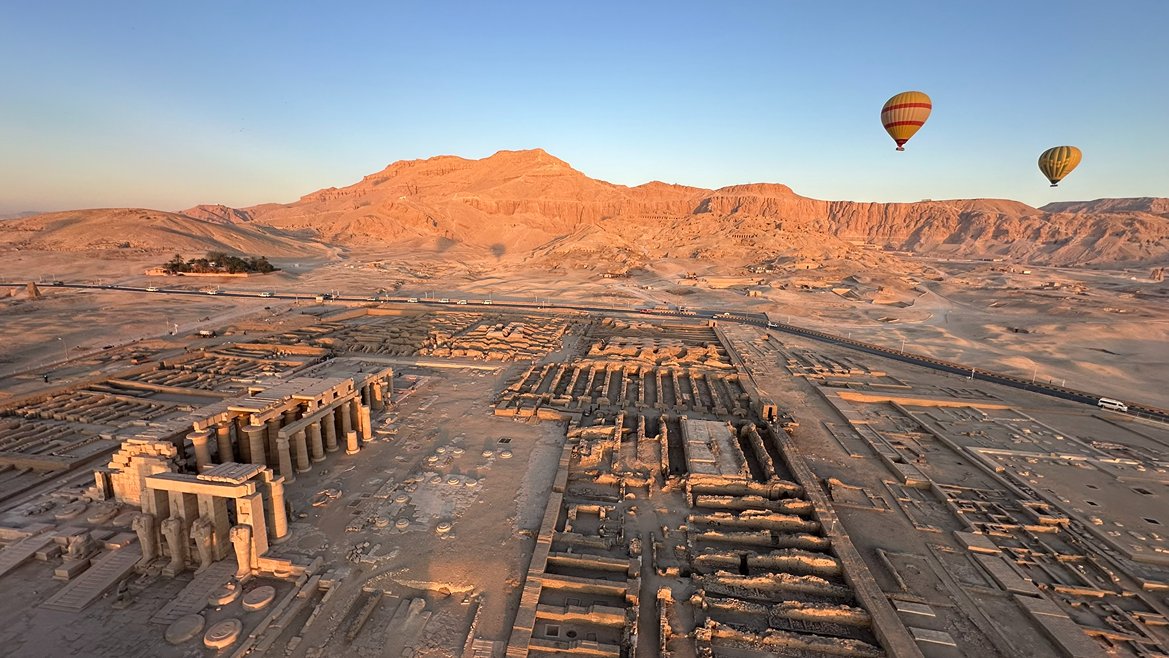
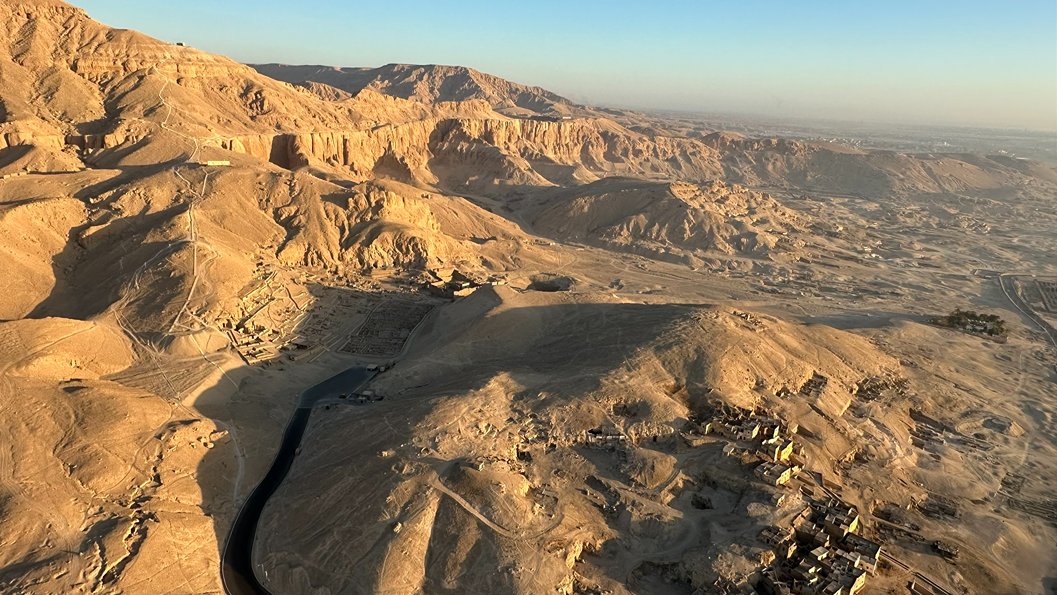

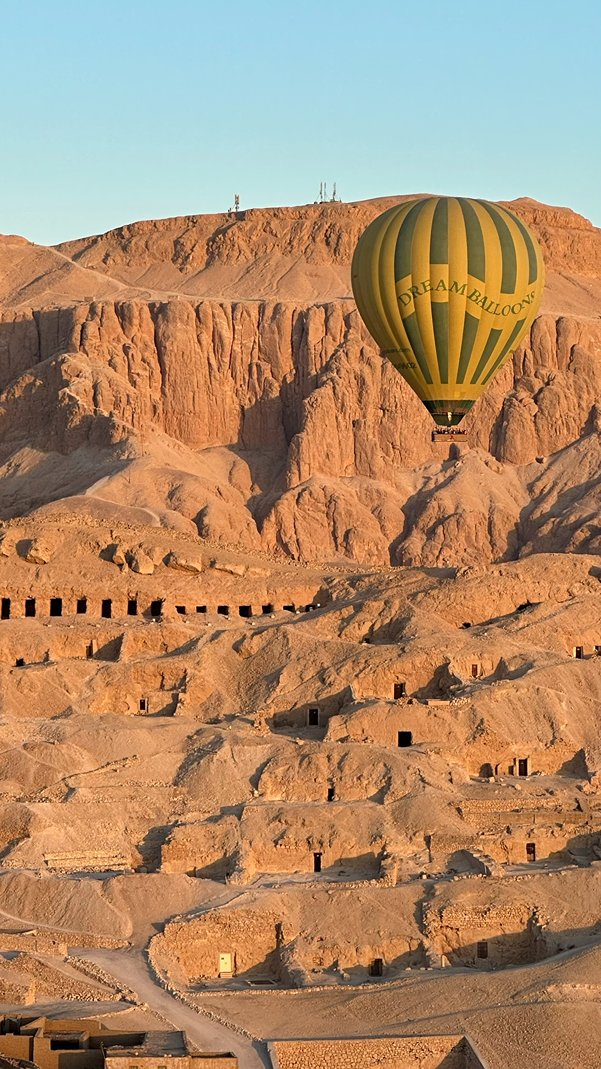
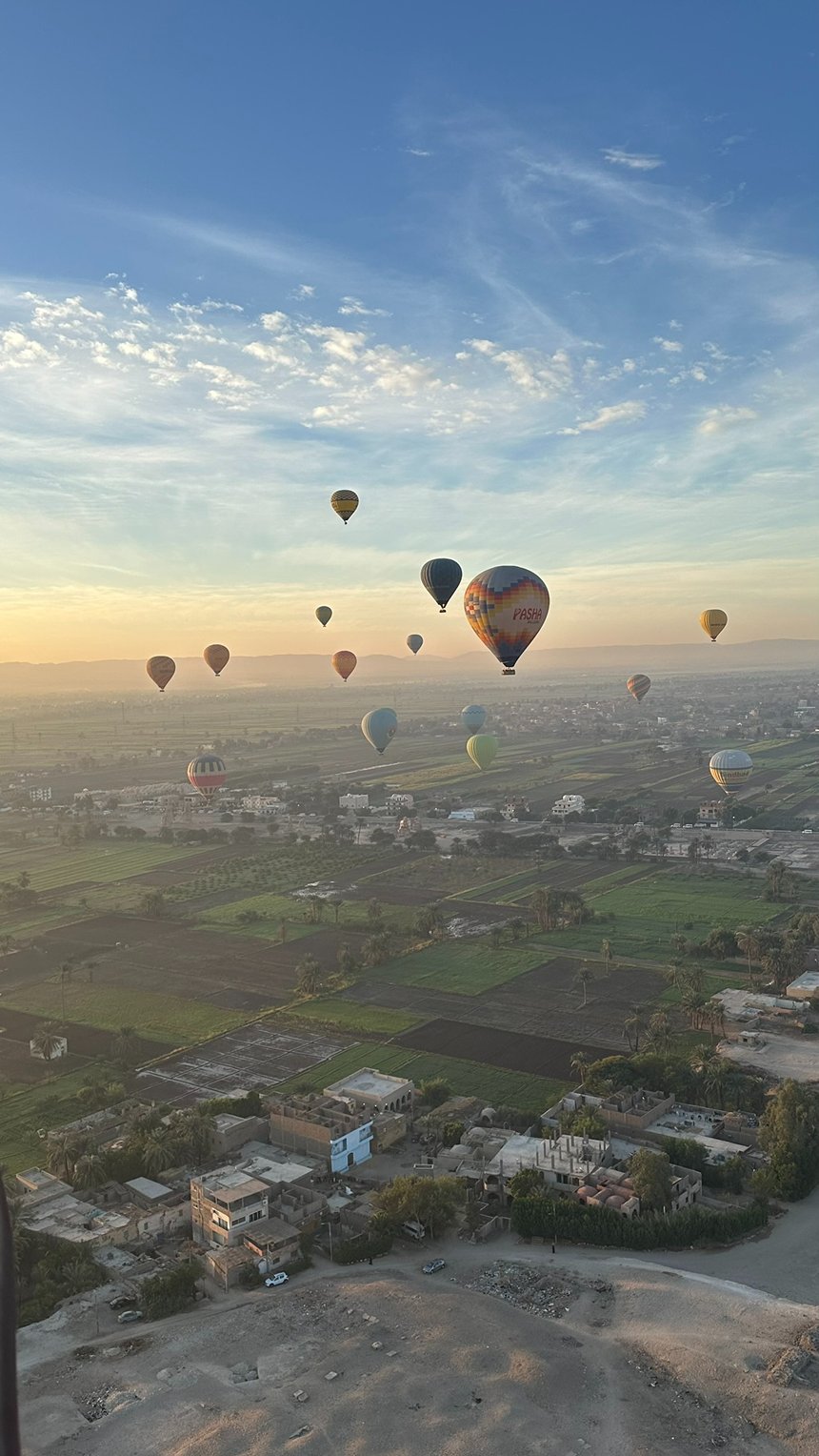
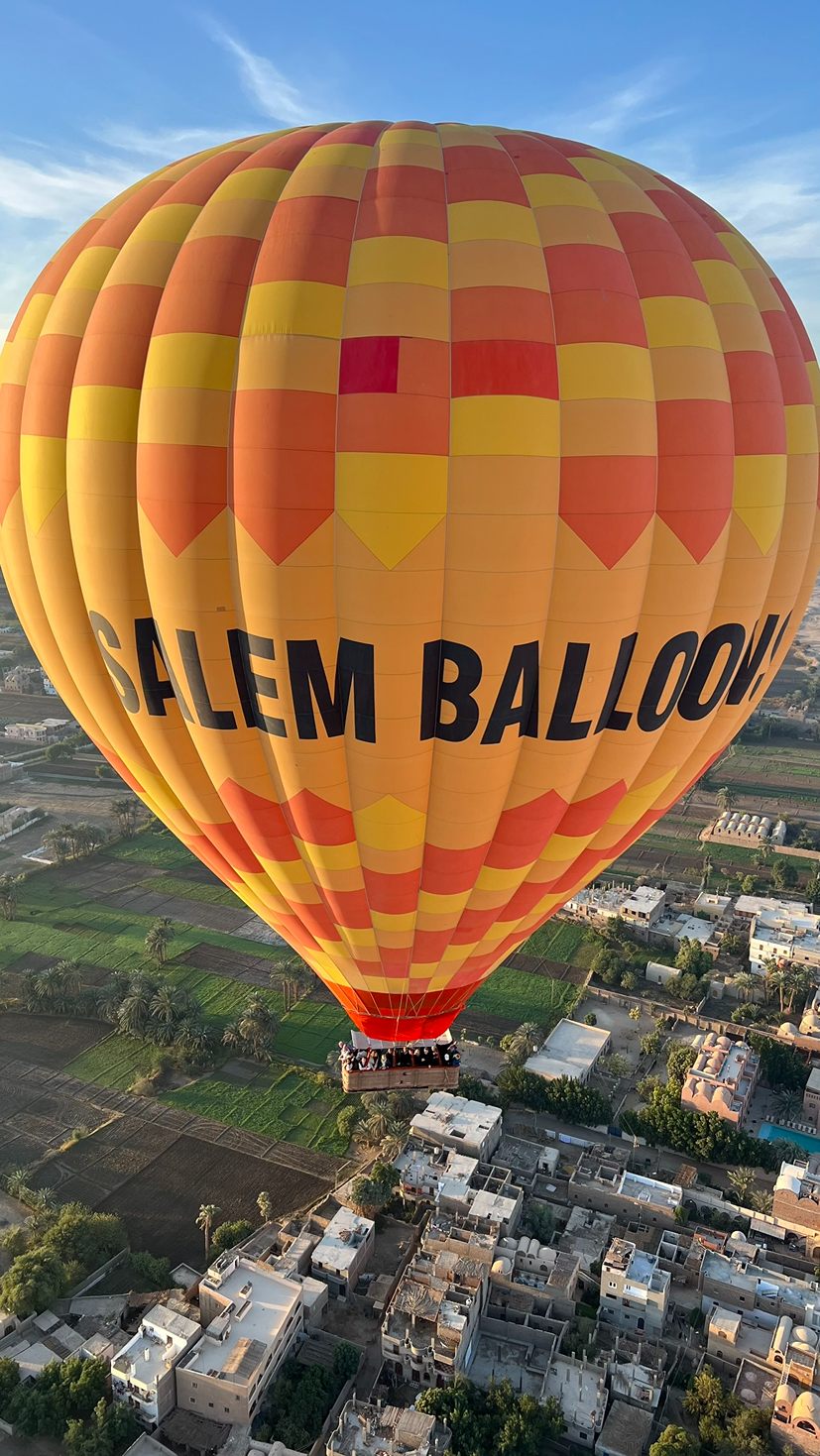
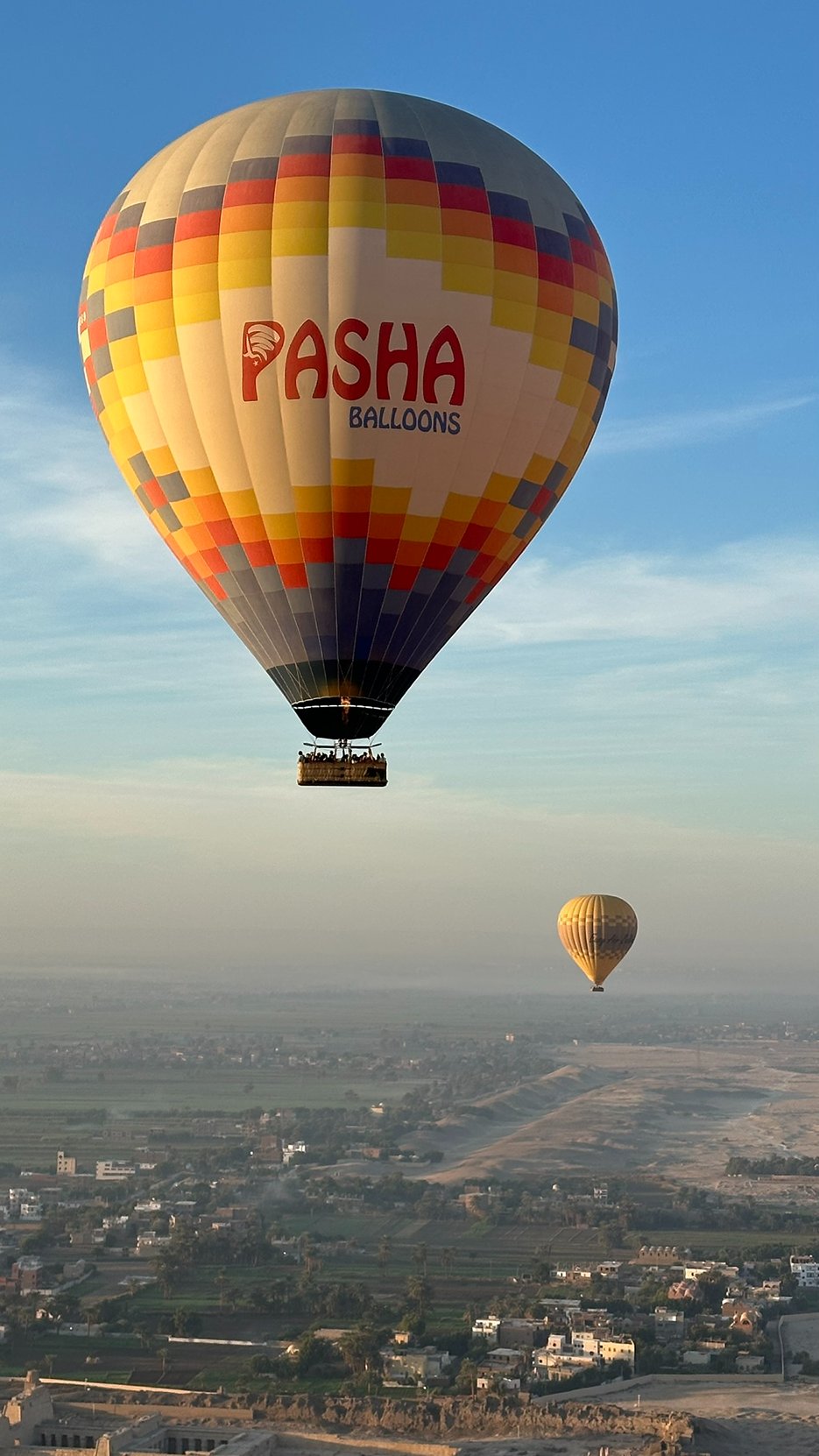
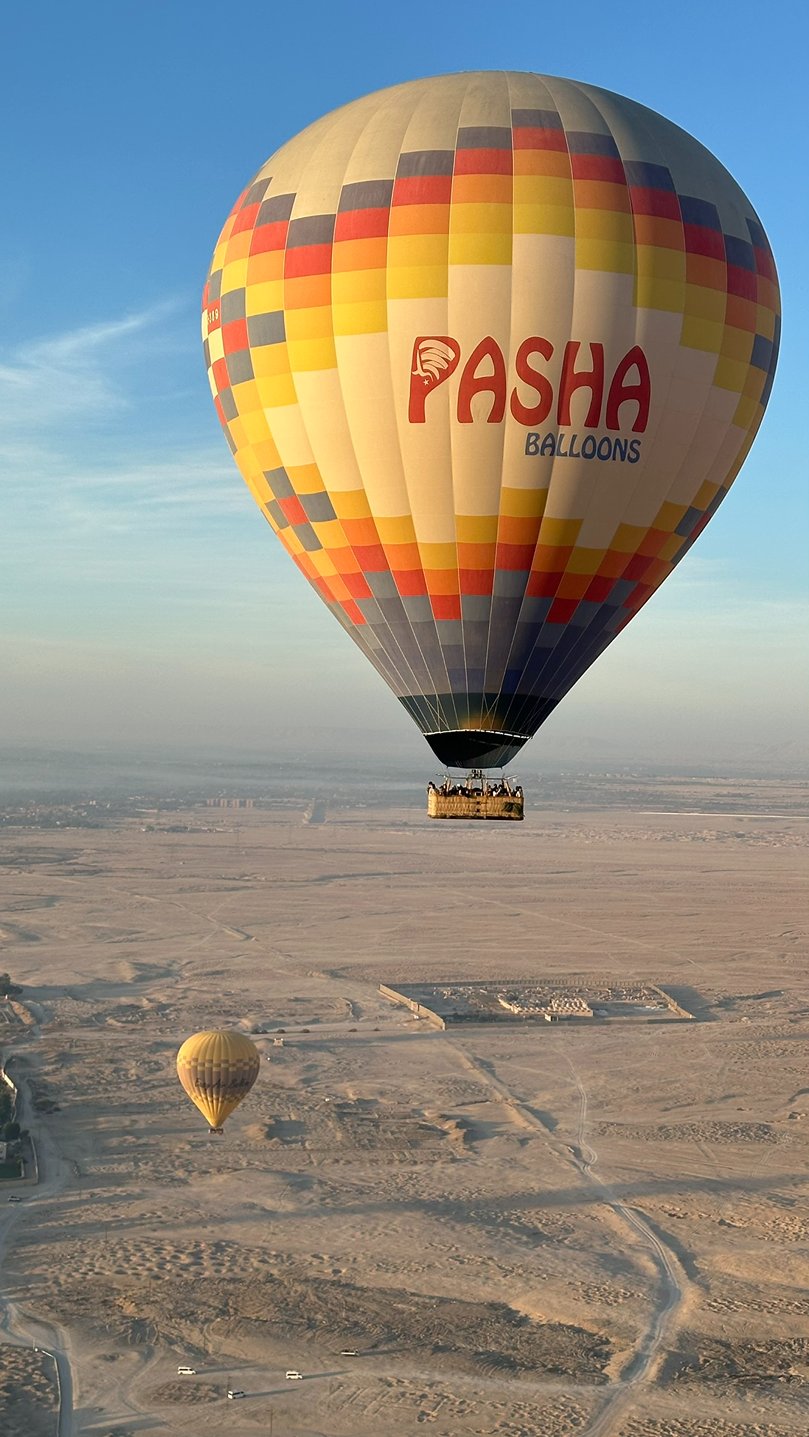
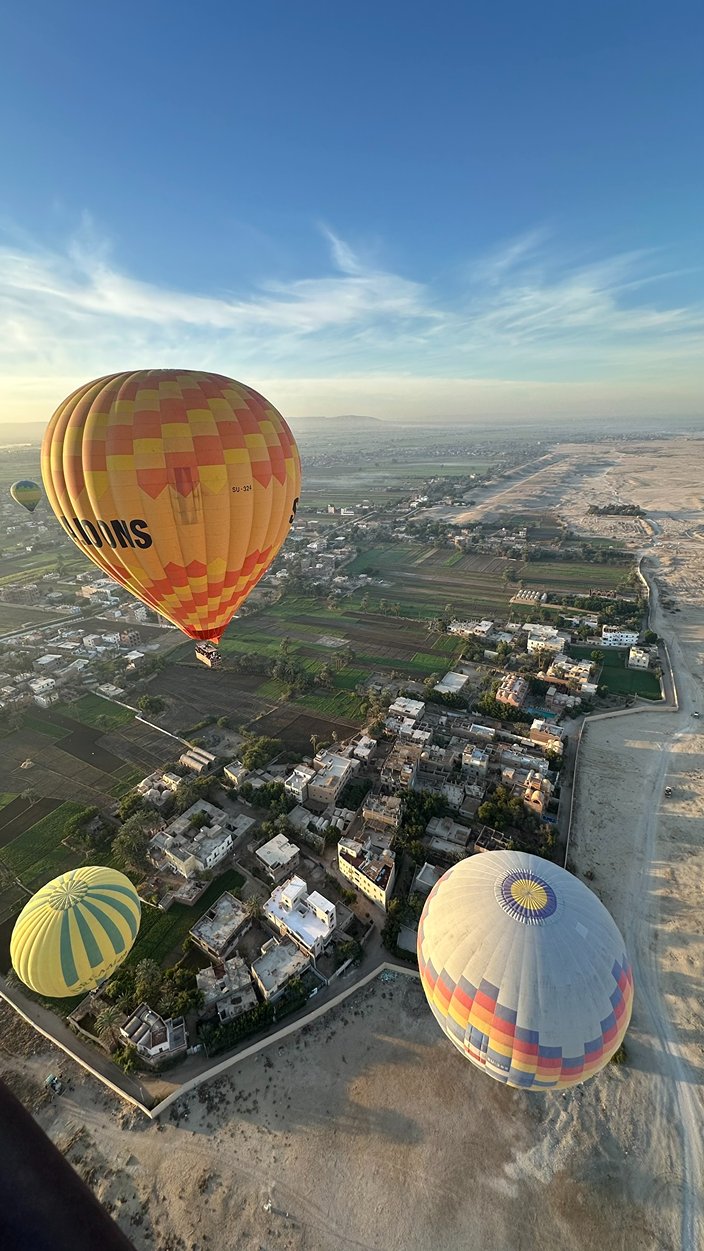
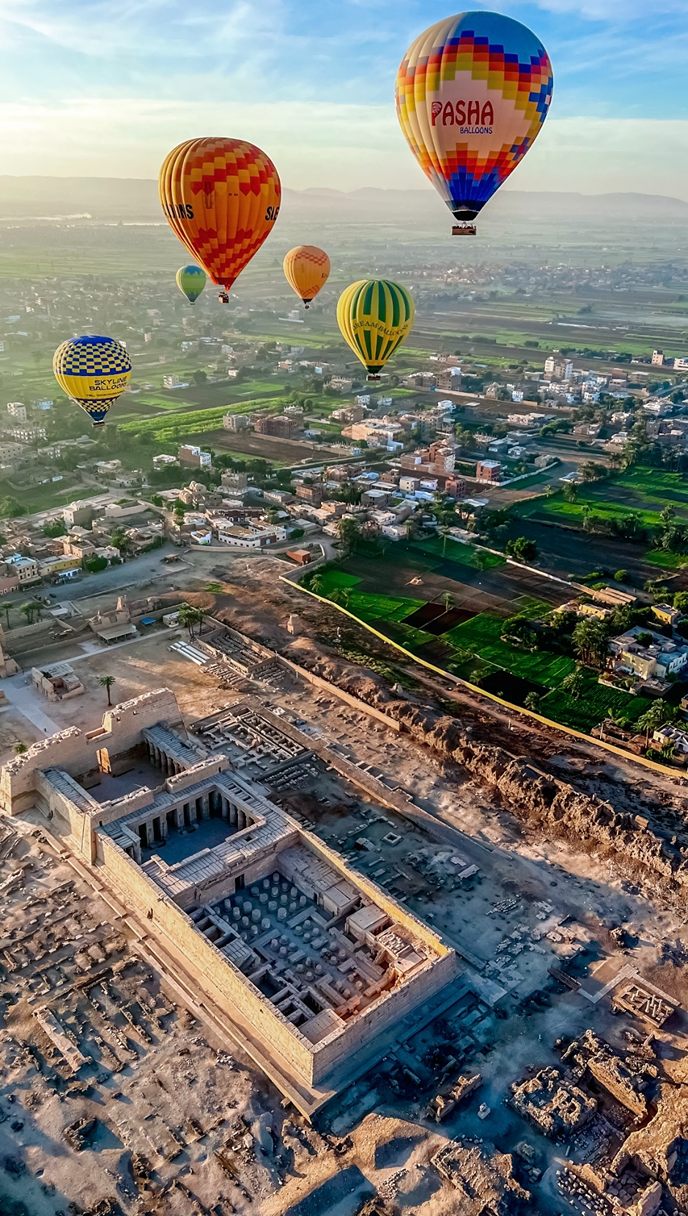
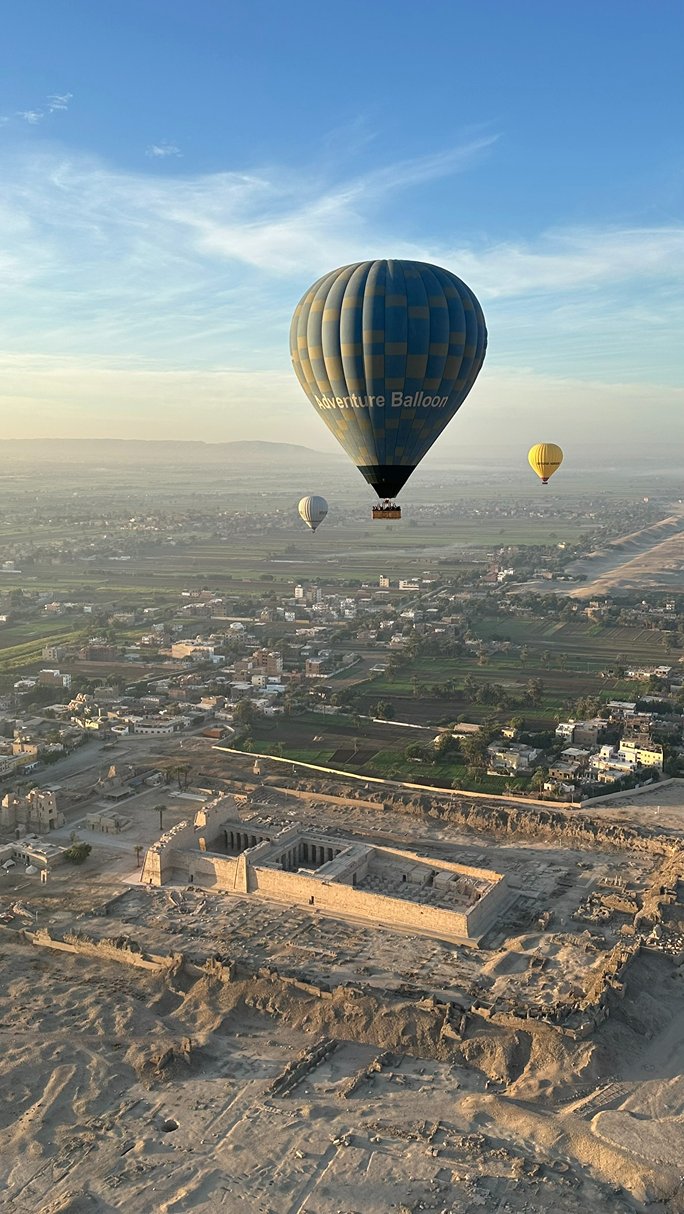
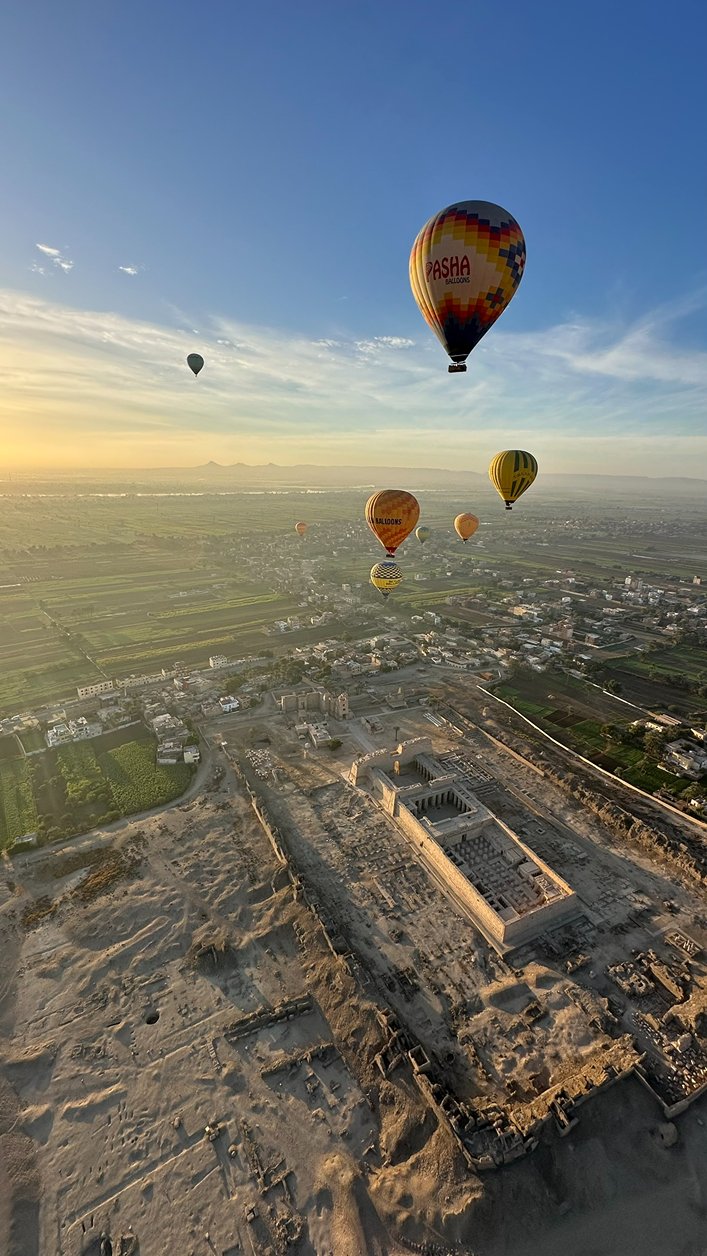
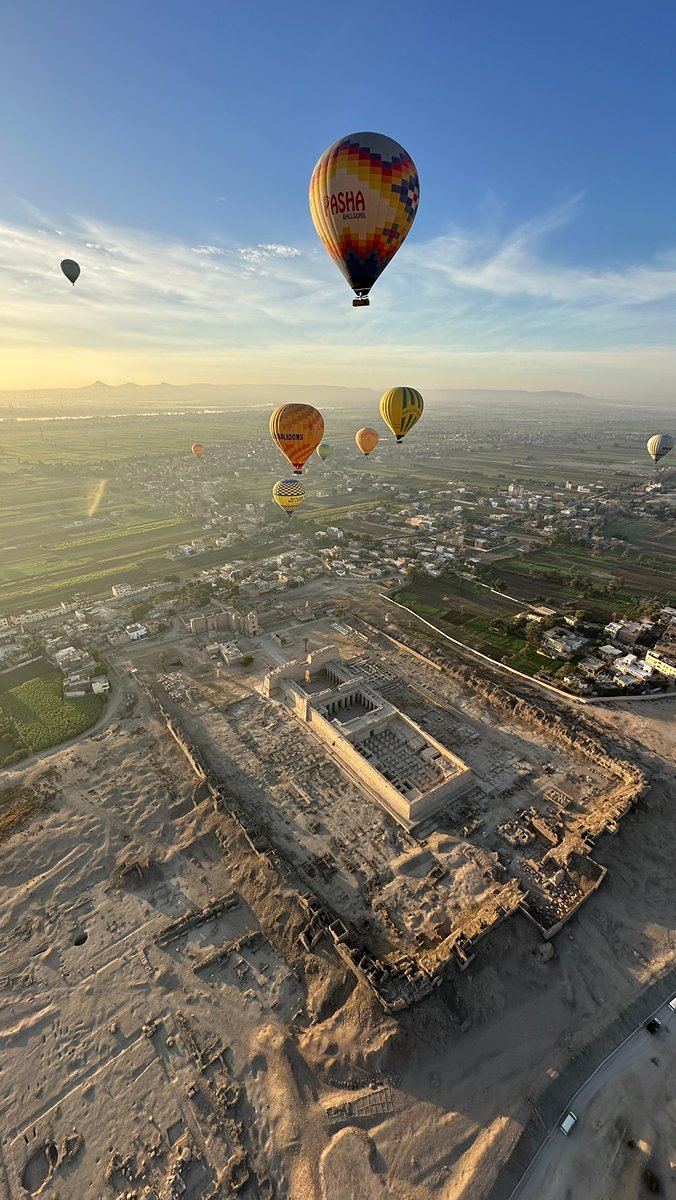
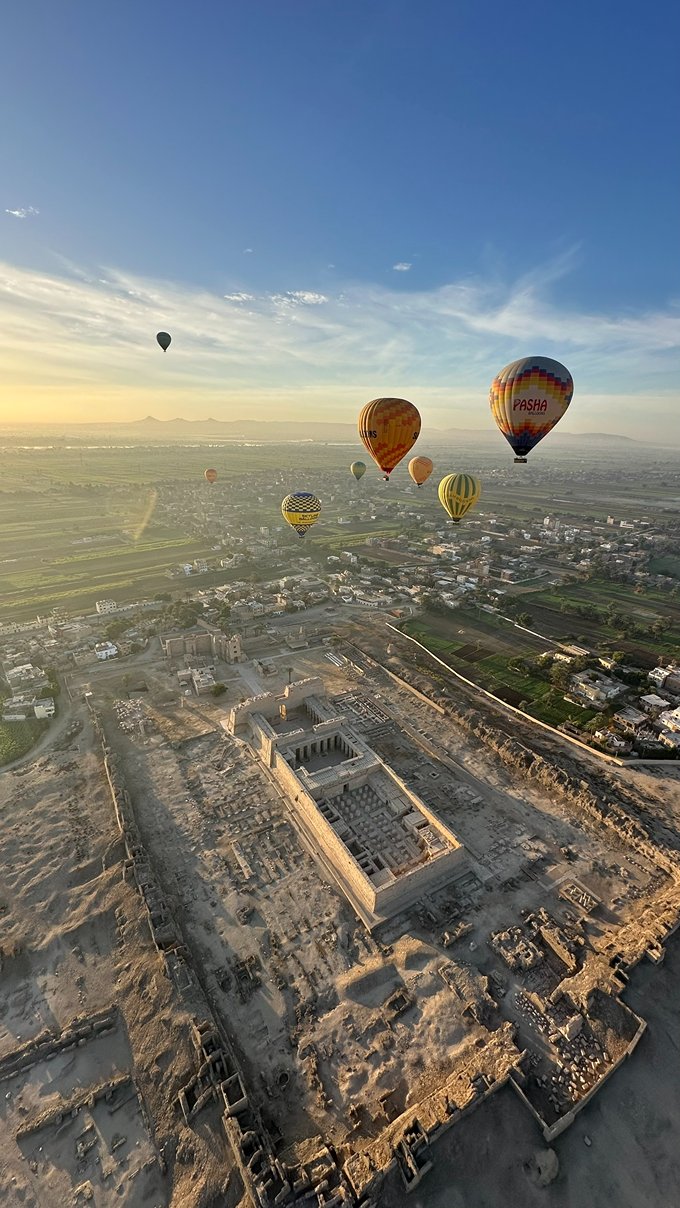
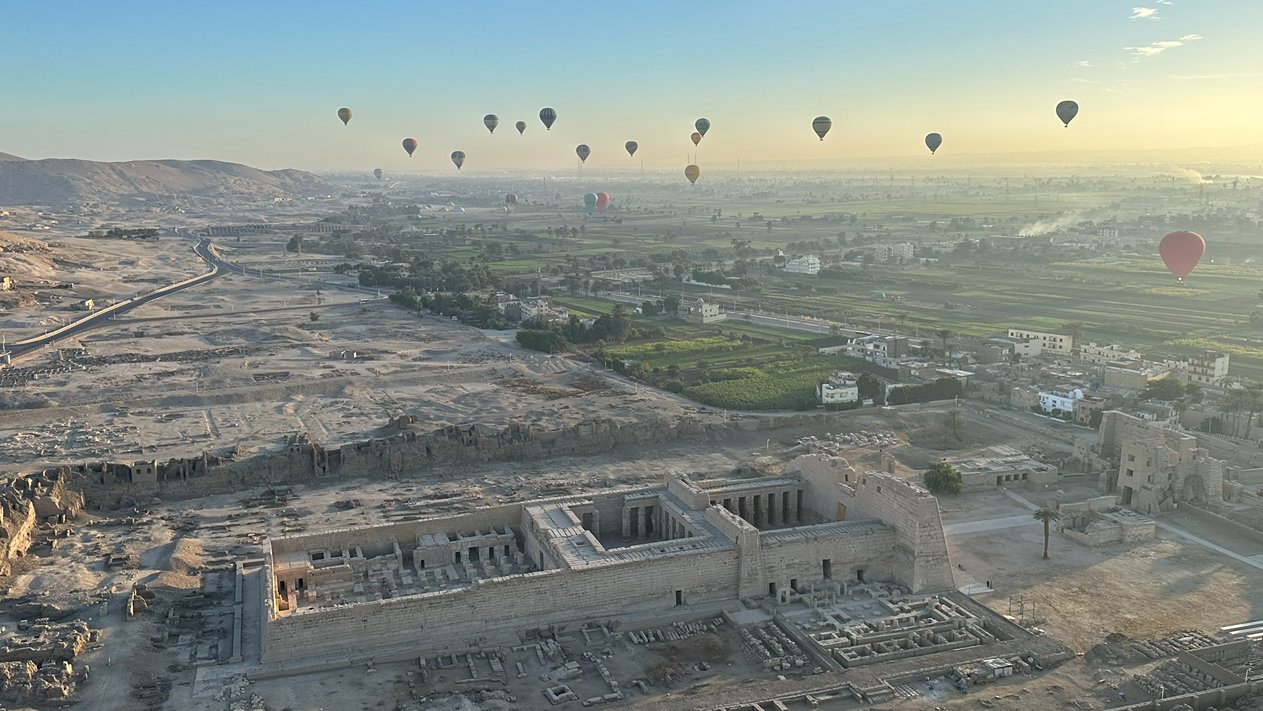
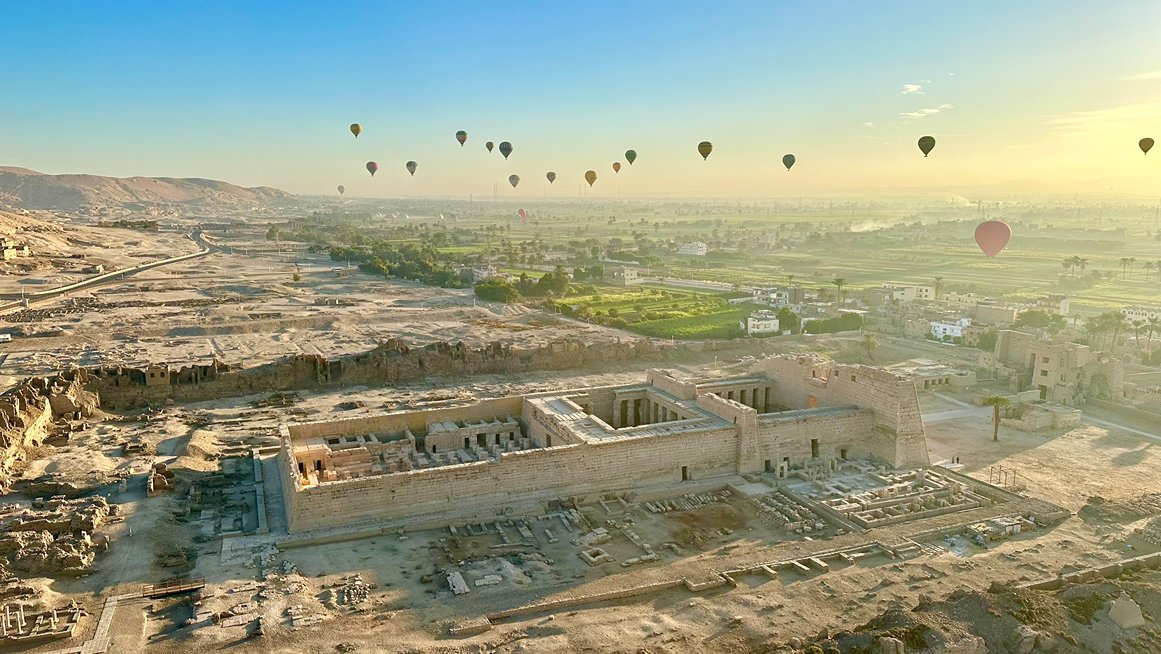
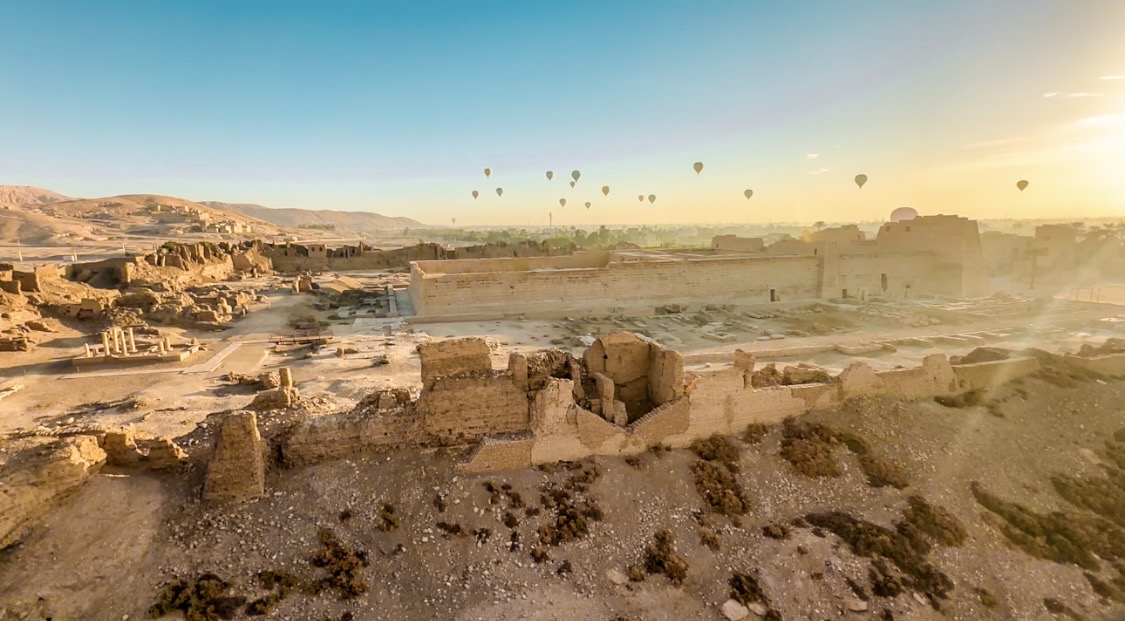
The Medinet Habu Temple is a massive mortuary temple complex built primarily by Ramesses III during the 12th century BCE. Like Ramsesseum, Medinet Habu served as both a religious center dedicated to the god Amun and a memorial temple honoring Ramses III after his death.
Medinet Habu is particularly significant for its remarkably well-preserved wall carvings and inscriptions, which vividly document Ramses III’s military victories, including battles against the infamous Sea Peoples.
A Soft Landing
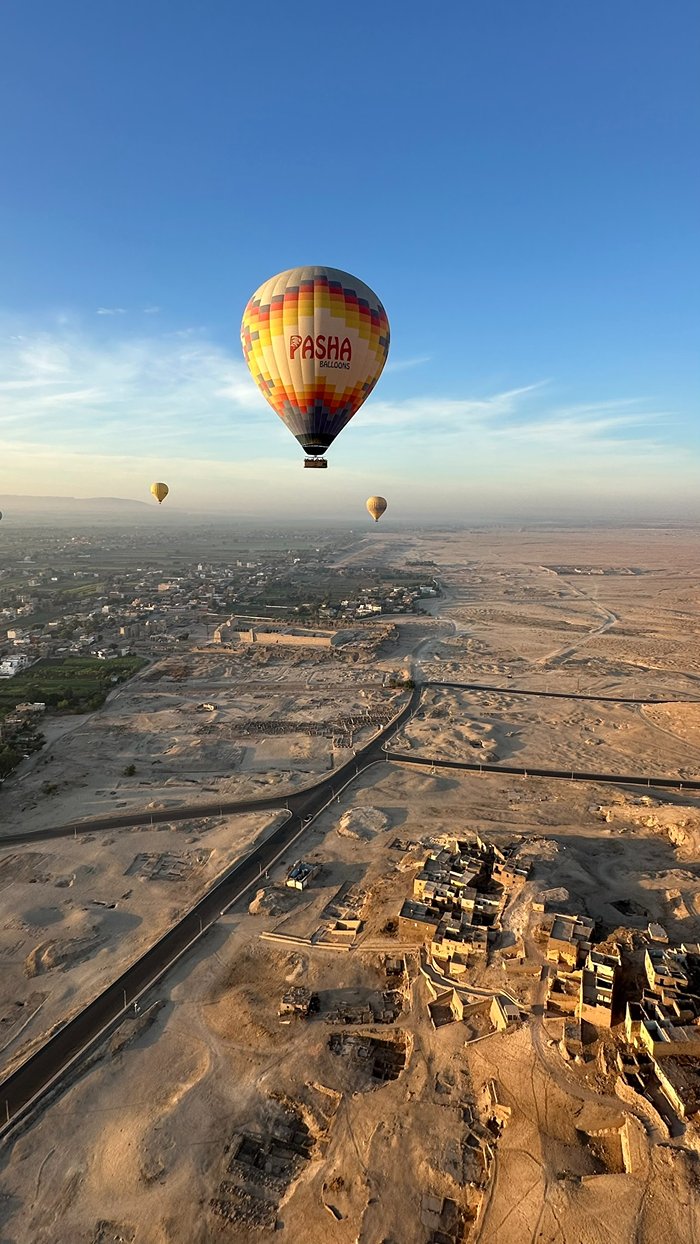
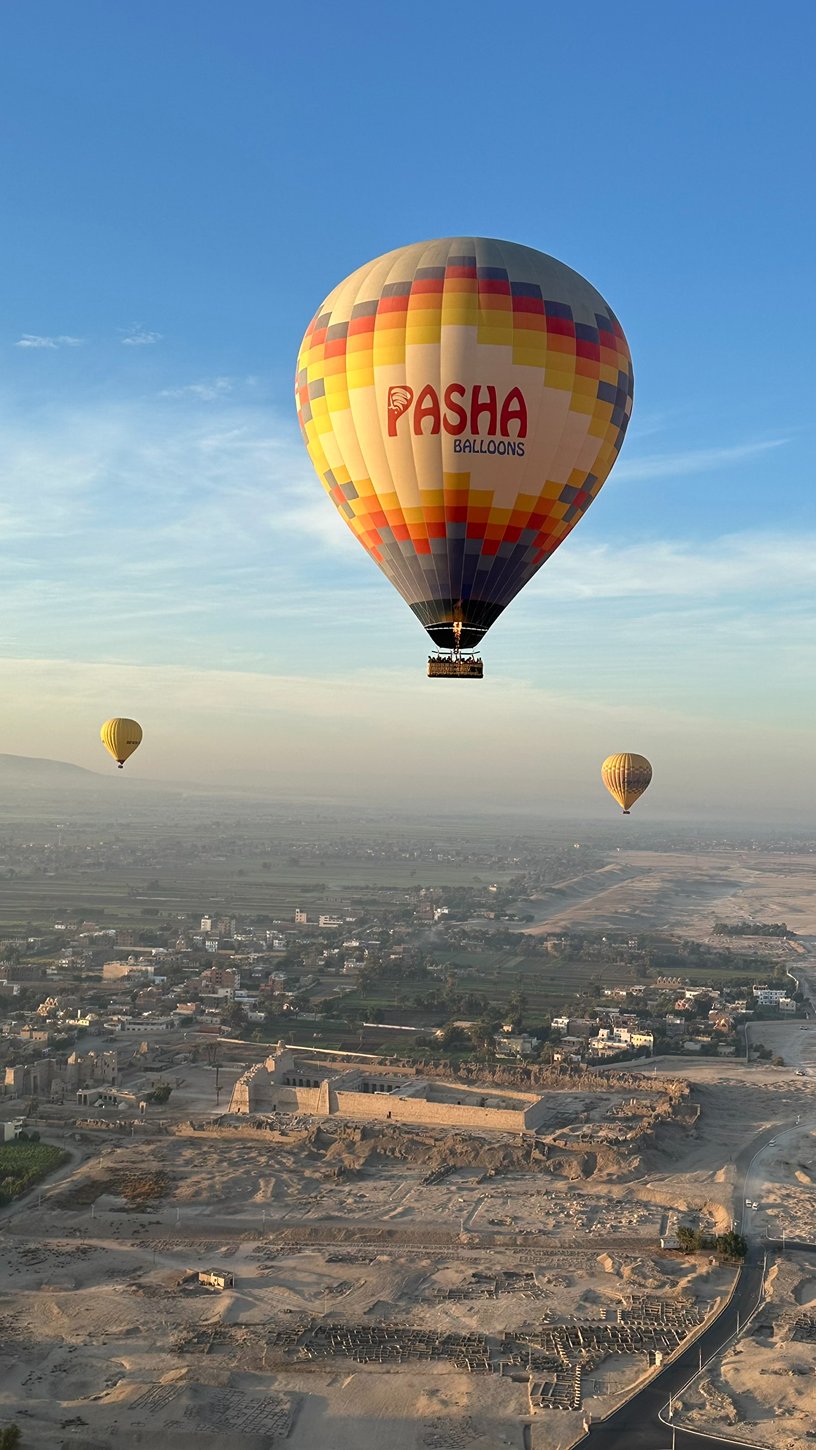
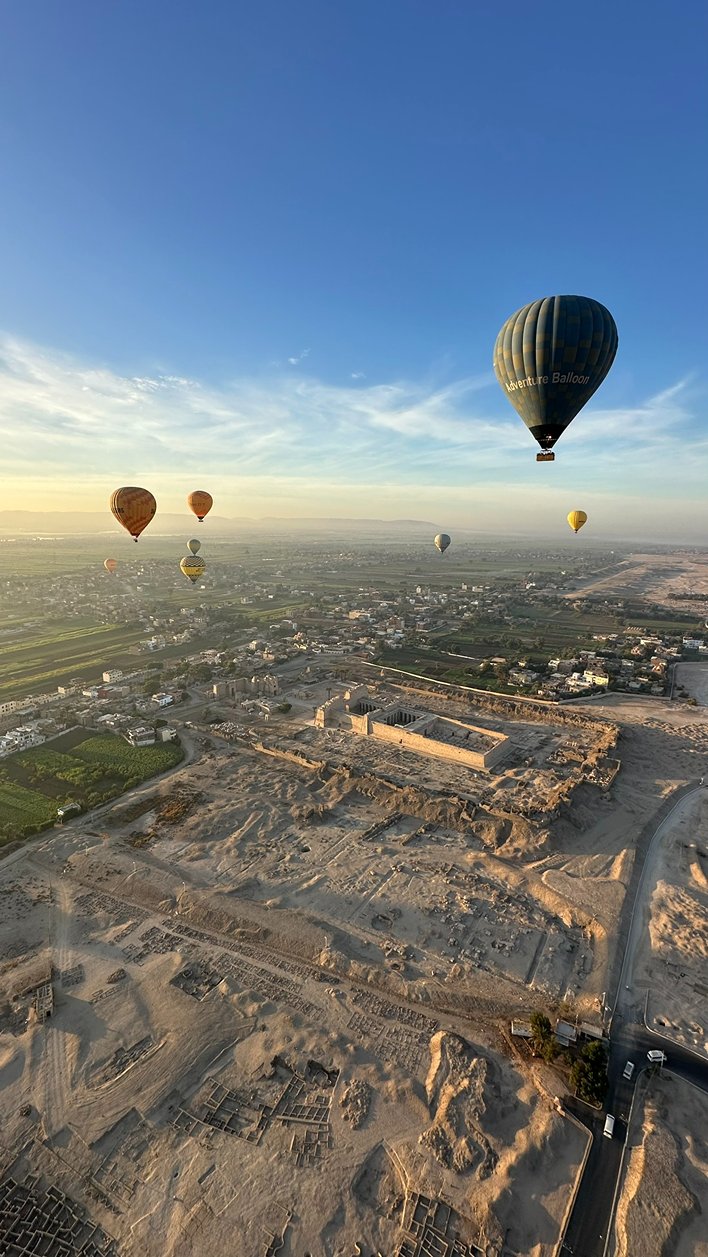
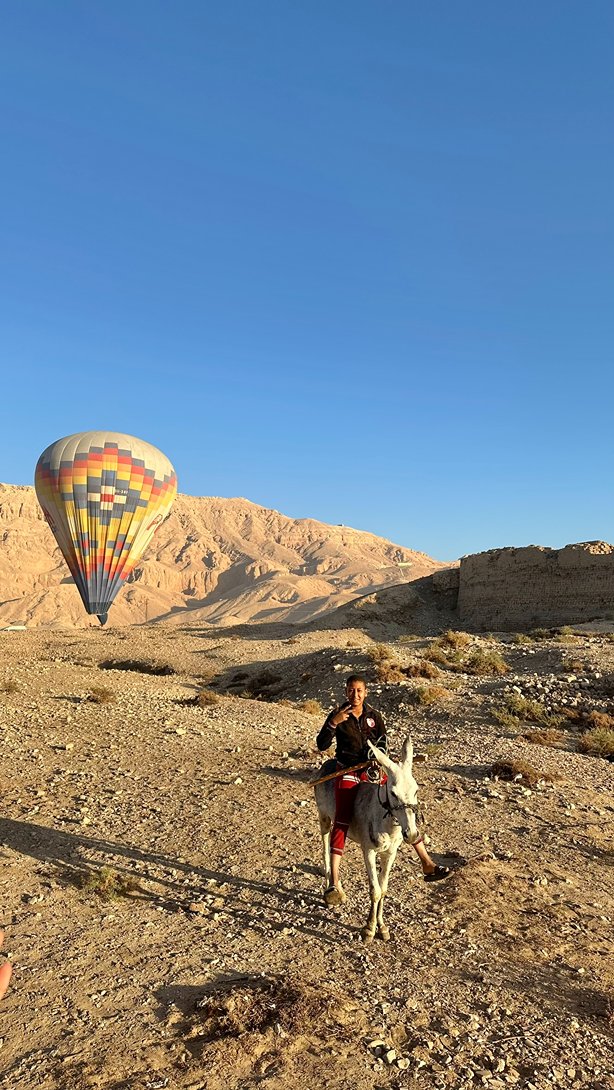
We drifted for around 25 minutes before we began our descent. We hovered right over the massive Medinet Habu Temple, perhaps my personal favorite of all the temples in Luxor, before landing softly right next to the fortified walls enclosing the temple.
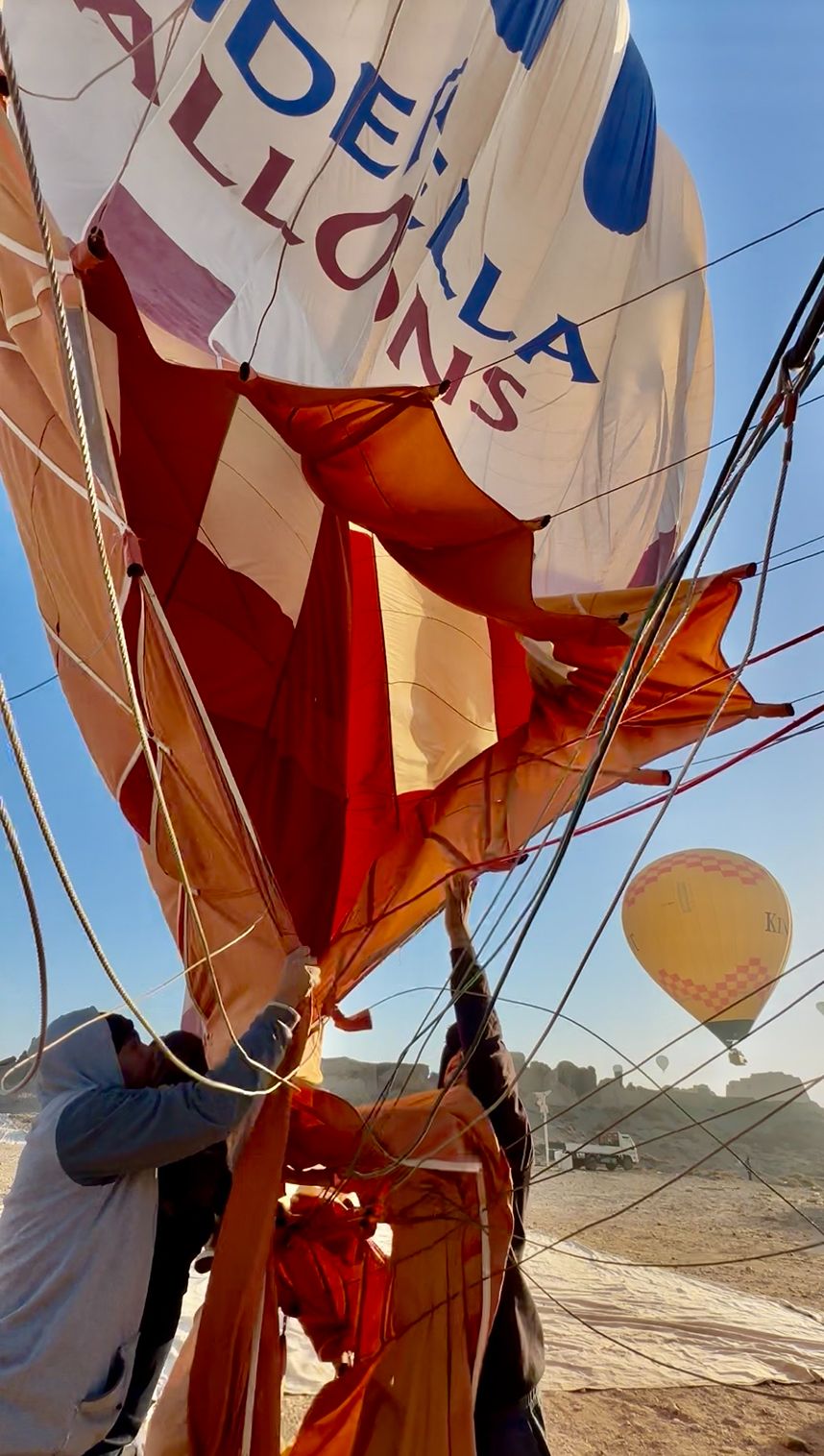
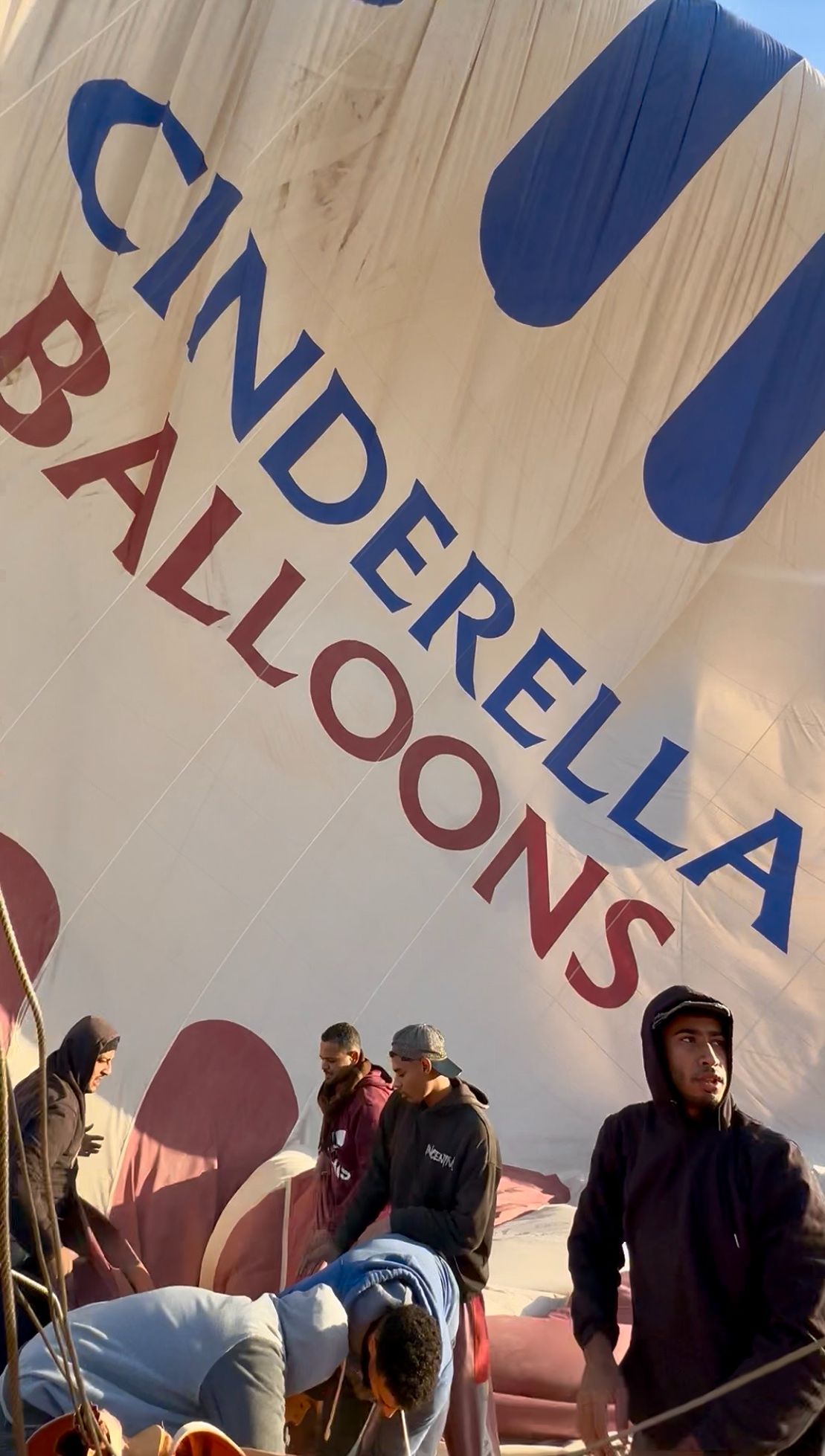
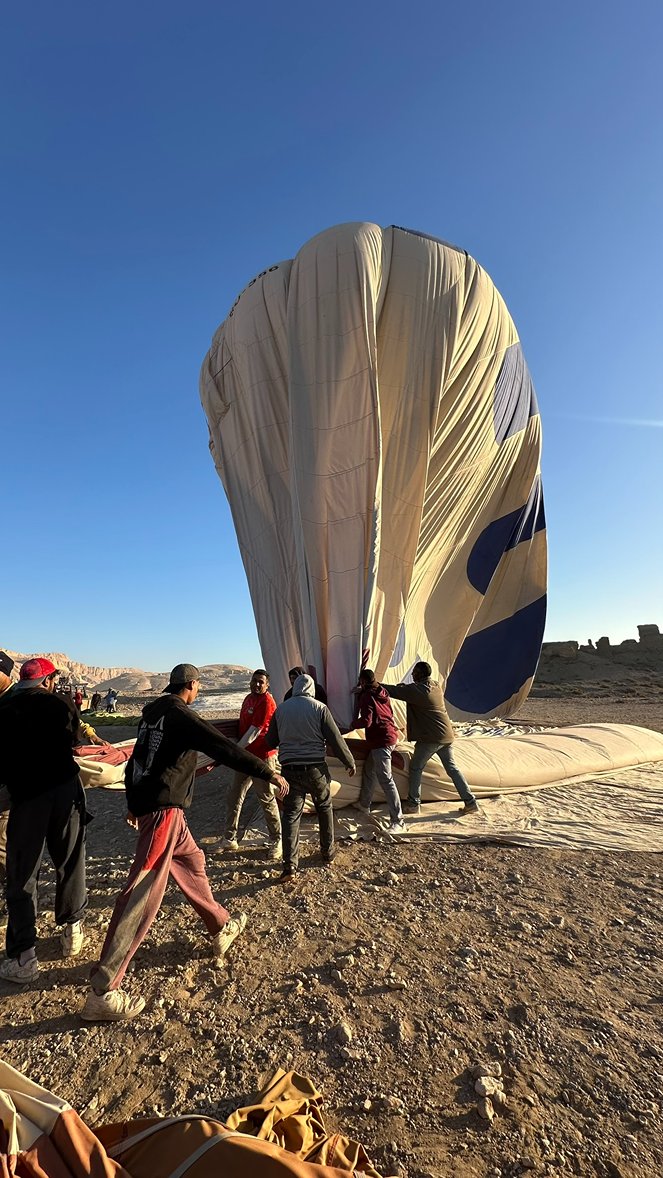
Almost immediately, a young boy riding a donkey came trotting over to us with a big smile on his face and flashing a peace sign, and several locals convened around us to help pull the balloon safely down to the side of the gondola.
A Marvelous Way to Start One’s Day
Yes, it was an incredibly early morning call. But there are very few ways to better start off your day than by ballooning in Luxor at sunrise.
Watching the desert slowly shift through shades of deep blue, orange, gold, and pink is magical on its own. Add in the multicolored hot air balloons surrounding you and the ancient temples scattered below, and you have got the greatest recipe to jolt your senses awake that even your strongest cup of coffee could never compete.
Questions and Answers
Do I recommend ballooning in Luxor?
- Yes, absolutely! That said, flexibility is important. Flights are heavily dependent on weather conditions and government clearance approvals, meaning there’s no guarantee your balloon will launch on time, or at all. We were fortunate enough to take off just before sunrise.
- Landing locations also vary depending on wind direction and safe landing conditions, so don’t expect to land exactly where we did. In some cases, passengers may need to walk a fair distance before meeting their return transportation.
Which balloon company did we book with?
- We flew with Cinderella Balloons. Our private guide, Michael, arranged everything for us, though most hotels in Luxor can easily organize a flight as well. There are several balloon companies operating in Luxor, with options ranging from large shared baskets to smaller group or fully private flights.
Could you request a certain flight path?
- No. Since 2009, all balloons have launched from a designated field on Luxor’s West Bank, meaning the flight paths are relatively standardized. You’ll typically fly over sites such as the Temple of Hatshepsut, the Ramesseum, and Medinet Habu. The most famous temples, Karnak and Luxor, will not be visible, as they are located on the East Bank.
What is the price for a flight?
- Prices vary greatly depending on the company and whether you choose a shared, small-group, or private flight. As a general rule, expect to pay at least $50 USD per person for a standard shared experience.
Will the balloon company provide hotel pickup and drop-off?
- Yes. Most companies include round-trip hotel transfers, and pickups can begin as early as 4:30 AM. If you’re given a pickup time, take it seriously. These tours run on tight schedules, and late passengers risk being left behind.
Discover more from Gal Gone Global
Subscribe to get the latest posts sent to your email.